Know Your Breasts
Being familiar with how your breasts normally look and feel is the best way to notice changes early. Breasts come in all shapes and sizes, and what's normal varies from person to person.
Normal Breast Characteristics
- Breasts are rarely perfectly symmetrical - some difference in size is normal
- Breast tissue extends into the armpit area
- Texture may feel lumpy or grainy (fibrous tissue)
- Breasts change throughout the menstrual cycle
- Montgomery glands (small bumps on areola) are normal
- Some hair around the nipple is normal
Cyclical Changes
Breasts often feel tender, swollen, or lumpy before your period due to hormonal changes. This is normal. Do self-exams at the same time each month (best: a few days after your period ends) to know what's normal for you.
Breast Self-Exam (BSE)
While self-exams don't replace clinical exams and mammograms, they help you become familiar with your breasts so you can notice changes.
When to Do It
- Once a month
- A few days after your period ends (breasts least tender)
- If no periods, pick a consistent day each month
How to Do a Self-Exam
Look in the Mirror
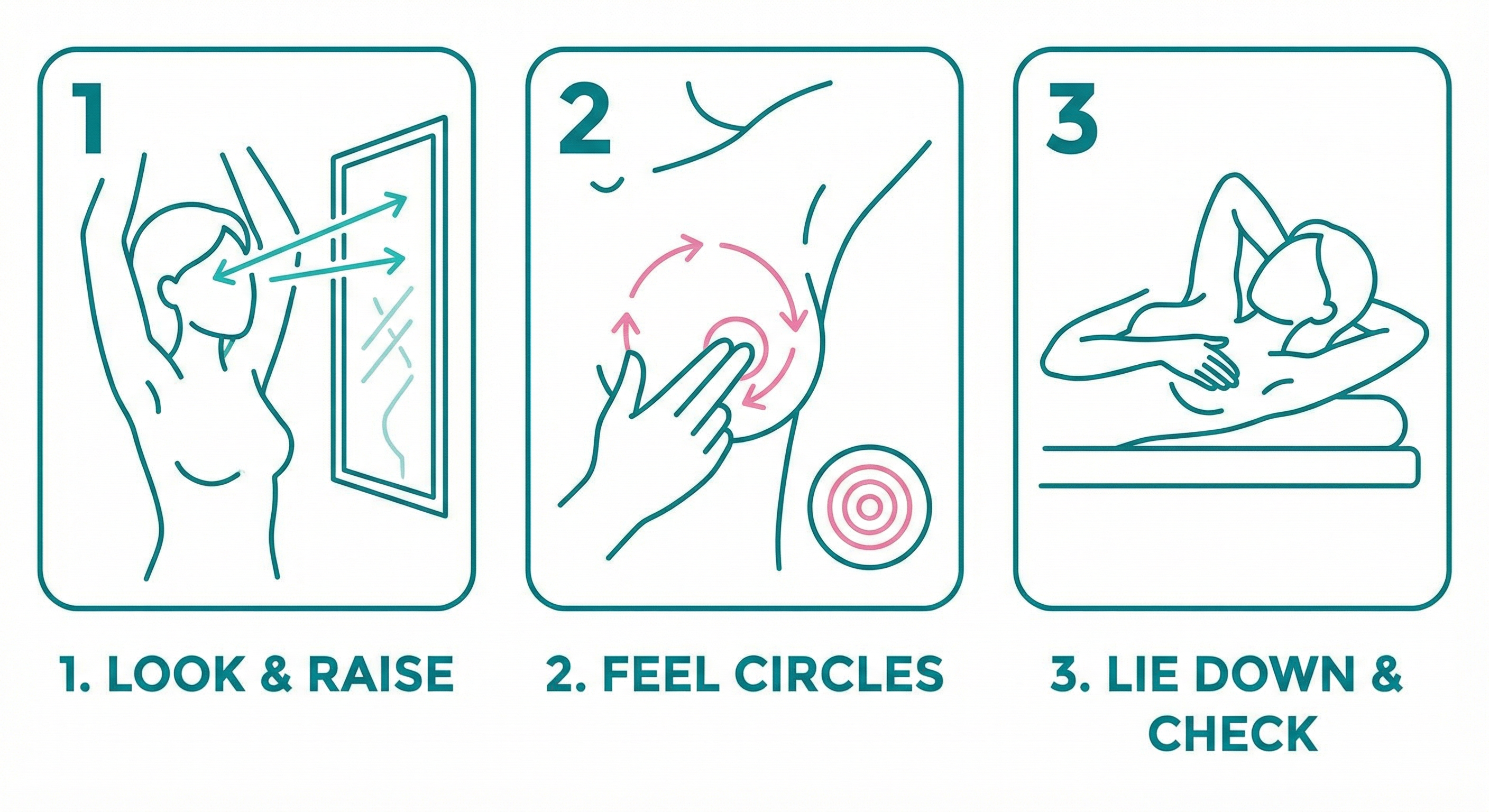
Stand in front of a mirror with arms at sides, then raise arms overhead. Look for changes in size, shape, skin texture (dimpling, puckering), nipple changes, or redness/swelling.
Feel While Standing/Sitting
Use your right hand to examine your left breast and vice versa. Use the pads of your three middle fingers. Press with light, medium, then firm pressure in small circular motions. Cover the entire breast from collarbone to bra line, armpit to breastbone.
Feel While Lying Down
Lie down with a pillow under your right shoulder. Put your right arm behind your head. Use your left hand to examine the right breast. Repeat on the other side. Breast tissue spreads out when lying down, making it easier to feel.
Check the Nipple
Gently squeeze each nipple and check for discharge. Note if any discharge is bloody, clear, or milky.
Shower Tip
Many women find it easiest to do the standing exam in the shower. Soapy fingers glide smoothly over the skin, making it easier to feel lumps.
Warning Signs to Watch For
See a doctor if you notice any of these changes:
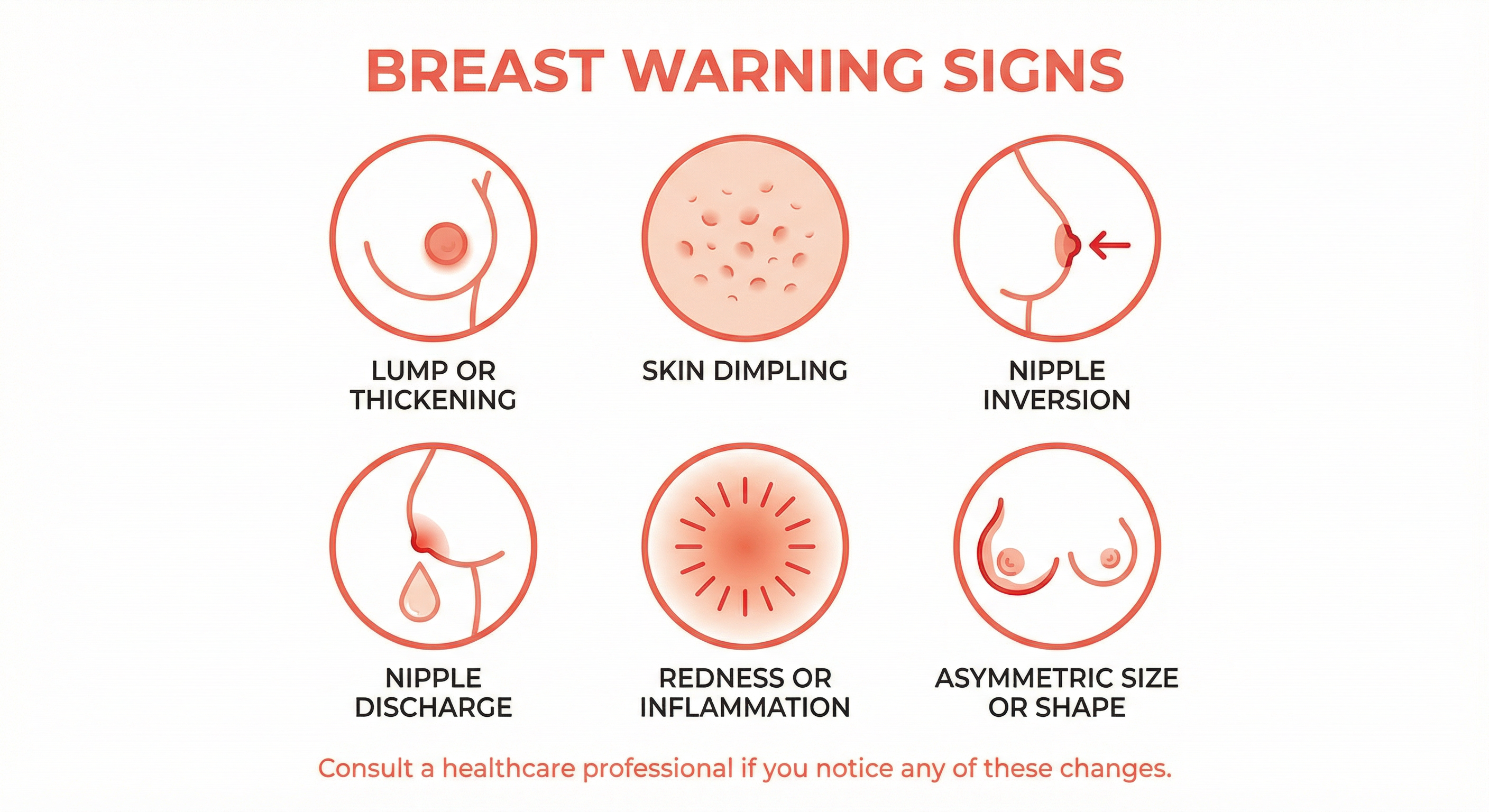
New lump in the breast or armpit
Thickening or swelling of part of the breast
Skin dimpling or puckering (like orange peel)
Nipple changes - turning inward, flattening
Nipple discharge - especially bloody or clear
Redness or flaky skin on nipple or breast
Change in size or shape of one breast
Pain in one spot that doesn't go away
Important Note
Most breast lumps are NOT cancer. 8 out of 10 lumps are benign (non-cancerous). However, any new lump should be evaluated by a doctor to be sure.
Normal vs. Concerning
Usually Normal
Breast tenderness before period - Hormonal and temporary
Lumpy or rope-like texture - Fibrocystic changes, common in many women
Lumps that come and go with your cycle - Often cysts
Slight size difference between breasts - Very common
Milky discharge when squeezed (not pregnant) - Can be hormonal, but mention to doctor
Get Checked
- Any lump that feels different from surrounding tissue
- A lump that doesn't go away after your period
- Changes that affect only one breast
- New pain that persists
- Skin or nipple changes
- Bloody nipple discharge
Screening & Mammograms
Mammogram Guidelines
- Age 40-44: Option to start annual mammograms
- Age 45-54: Annual mammograms recommended
- Age 55+: Every 1-2 years, depending on preference and risk
- High risk: May need to start earlier and include MRI
What is a Mammogram?
A mammogram is an X-ray of the breast that can detect tumors too small to feel. The breast is placed between two plates that compress it to get a clear image.
- Takes about 20 minutes
- May be uncomfortable but shouldn't be very painful
- Best scheduled after your period when breasts are less tender
- Avoid deodorant/lotion on exam day (can interfere with images)
Early Detection Saves Lives
When breast cancer is detected early (localized stage), the 5-year survival rate is 99%. Regular screening is the best way to find cancer early when it's most treatable.
Breast Health & Lifestyle
Reduce Your Risk
- Maintain healthy weight: Obesity increases breast cancer risk, especially after menopause
- Exercise regularly: At least 150 minutes per week of moderate activity
- Limit alcohol: Risk increases with amount consumed
- Don't smoke: Linked to higher risk of breast cancer
- Breastfeed if possible: May provide some protection
- Limit hormone therapy: Discuss risks with your doctor
Bra Facts
- Wearing a bra does NOT cause breast cancer
- Sleeping in a bra does NOT cause breast cancer
- Underwire bras do NOT cause breast cancer
- However, wearing a well-fitted bra improves comfort and support
Breast Changes Through Life
During Puberty
Breasts begin developing, may be tender or grow unevenly. This is normal.
During Menstrual Cycle
Breasts may swell, become tender, or feel lumpy before your period. Changes resolve after menstruation.
During Pregnancy & Breastfeeding
Significant changes - enlargement, darkening of nipples, milk production. Breasts may remain larger after pregnancy.
During Menopause
Loss of firmness, change in size, less density. These changes are normal as hormones decline.
When to See a Doctor
Schedule an appointment if you notice:
- Any new lump or mass
- Changes in breast appearance
- Nipple discharge (especially bloody)
- Skin changes on the breast
- Breast pain that concerns you
- You're due for a clinical breast exam or mammogram
Don't Wait
If something concerns you, don't wait for your next scheduled appointment. Most findings are benign, but early evaluation provides peace of mind and catches problems early if they exist.