Before You Begin
Your first sexual experience is a significant moment. Taking time to prepare emotionally and practically can help make it more comfortable and positive.
Ask Yourself
- Am I ready? There's no "right" age - only when YOU feel ready
- Do I trust this person? Emotional safety matters
- Is this my choice? Never feel pressured by a partner, friends, or society
- Have we discussed boundaries? Communication is essential
- Do I have protection? Contraception and STI prevention
Signs You're Ready
- You want to - not because of pressure
- You can talk openly with your partner about sex
- You've discussed contraception and protection
- You feel comfortable saying "stop" if needed
- You trust your partner to respect your boundaries
Signs You're NOT Ready
- You feel pressured or obligated
- You're trying to keep a partner or prove something
- You're intoxicated
- You can't talk to your partner about it
- You have doubts or feel anxious about the relationship
Myths vs. Reality
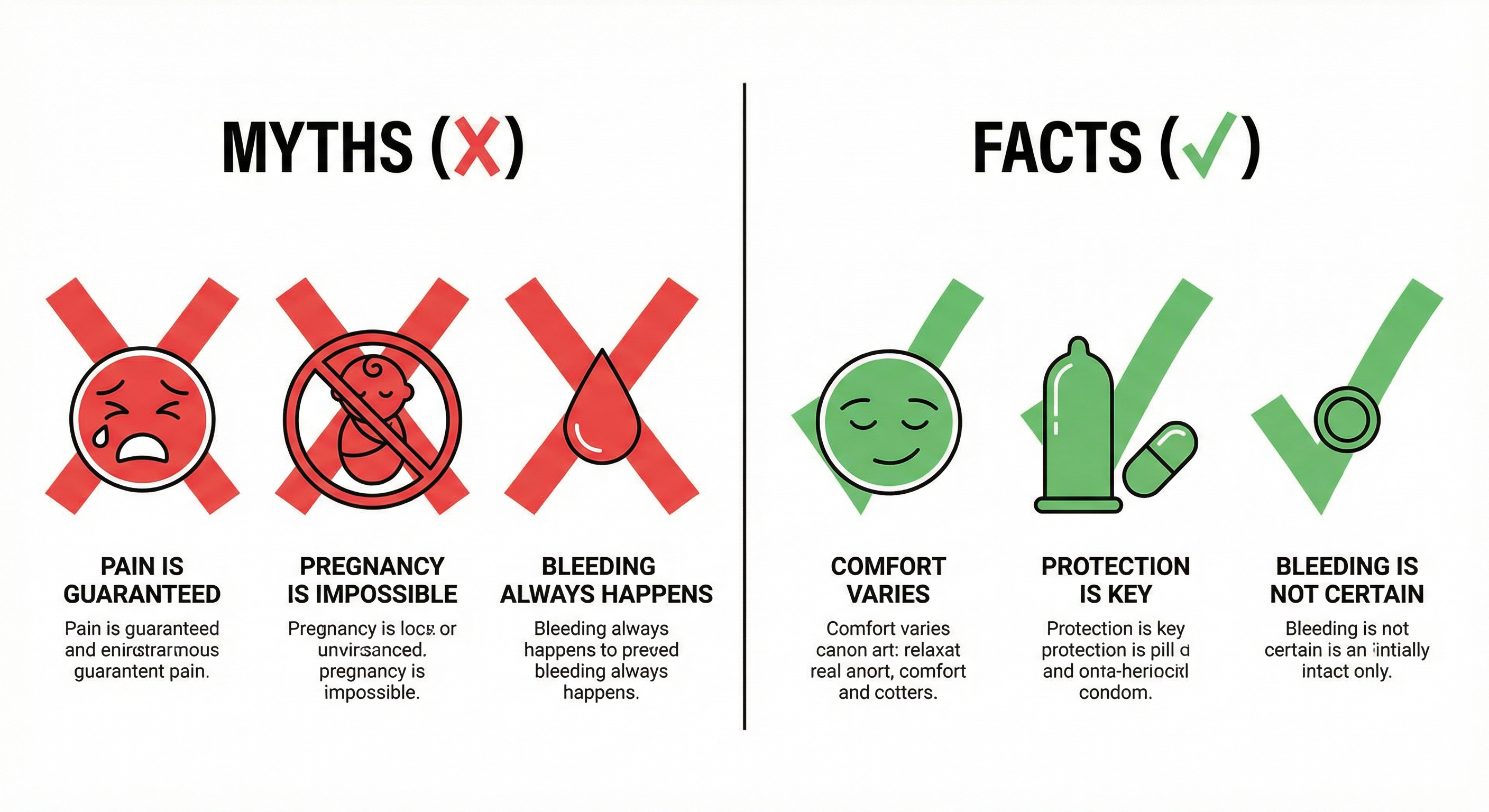
❌ Myth
"The first time always hurts for women"
✓ Reality
With enough arousal, lubrication, and going slowly, it shouldn't be painful. Some discomfort is possible, but sharp pain means stop.
❌ Myth
"The hymen 'breaks' and bleeds"
✓ Reality
The hymen stretches, doesn't break. Many women don't bleed at all. Bleeding isn't proof of virginity.
❌ Myth
"Men always know what to do"
✓ Reality
First times are awkward for everyone. Porn is not education. Communication is more important than "technique."
❌ Myth
"You can't get pregnant your first time"
✓ Reality
You absolutely CAN get pregnant the first time. Always use contraception.
❌ Myth
"It should be perfect like in movies"
✓ Reality
Real first times are often awkward, quick, and fumbling. That's completely normal. It gets better with practice and communication.
Preparation Checklist
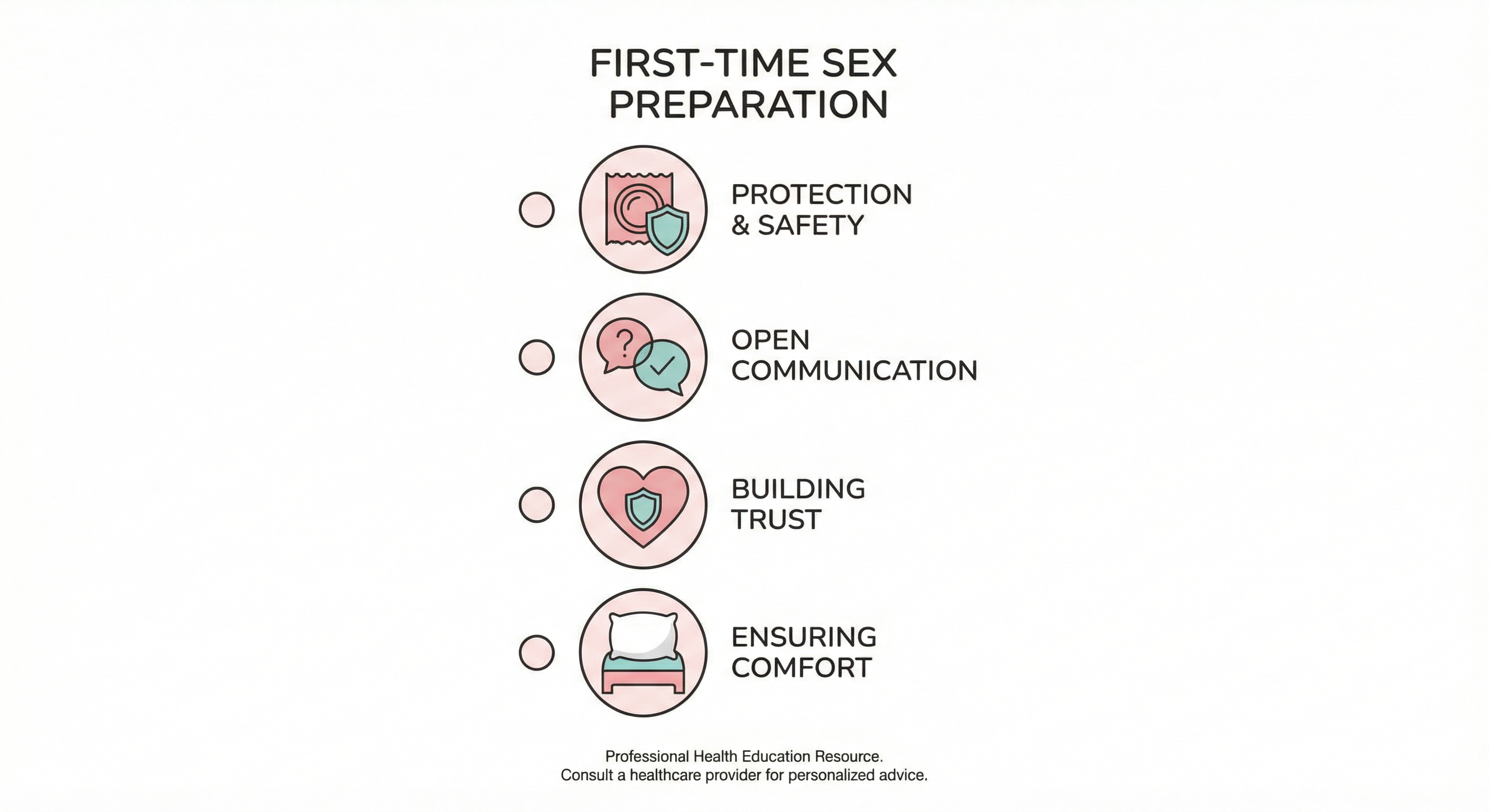
Protection
Communication
Setting
What to Expect
1. Take Your Time with Foreplay
Don't rush to penetration. Kissing, touching, and other intimacy builds arousal. For women especially, arousal causes natural lubrication and relaxation that makes penetration more comfortable. Spend at least 15-20 minutes on foreplay.
2. Use Lubricant
Even with natural lubrication, extra lube helps reduce friction and discomfort. Apply to both the penis/toy and the vaginal opening. Reapply as needed. Water-based lube is safe with condoms.
3. Go Slowly
The receiving partner should control the pace. Start with fingers if comfortable. When ready for penetration, the penis should enter slowly, pausing to allow adjustment. There's no rush.
4. Communicate Throughout
"Is this okay?" "Slower" "That feels good" "Let's try a different angle" - talking isn't awkward, it's essential. Check in with each other.
5. It May Be Brief
First times are often short - that's normal. Men may ejaculate quickly due to excitement. Women often don't orgasm from first-time penetration. Focus on the experience, not performance.
6. Aftercare
Cuddle, talk, check in emotionally. Go to the bathroom (especially women - helps prevent UTIs). Clean up. Process the experience together.
For Women
About the Hymen
The hymen is a thin membrane at the vaginal opening. Important facts:
- It's NOT a seal - it has an opening (otherwise periods couldn't happen)
- It varies greatly in shape, size, and thickness
- Many women's hymens stretch naturally from activities, tampons, etc.
- It stretches during penetration - doesn't "break"
- Not bleeding does NOT mean you weren't a virgin
- Bleeding is NOT required or guaranteed
Managing Discomfort
- Arousal first: Being fully aroused naturally lubricates and relaxes vaginal muscles
- Use lube: Generously - it makes a huge difference
- Control the pace: You guide the speed and depth
- Positions: Being on top gives you more control
- Relax: Tension tightens muscles. Breathe deeply.
- If it hurts: Stop. Pain is a signal. More foreplay, more lube, slower pace.
Orgasm
Most women don't orgasm from penetration alone, especially the first time. This is completely normal. Clitoral stimulation (before, during, or after penetration) is how most women orgasm.
For Men
Common Concerns
- Performance anxiety: Very common. Nervousness can affect erection. Relax, focus on connection not performance.
- Finishing too quickly: Extremely common the first time due to excitement. Not a failure.
- Erection difficulties: Nerves can cause this. It doesn't mean something is wrong. Take breaks, focus on other intimacy.
- Not knowing what to do: No one does at first! Communication helps. Ask your partner what feels good.
How to Be a Good Partner
- Focus on her pleasure: Foreplay, clitoral stimulation, asking what feels good
- Go slowly: Let her set the pace for penetration
- Use protection: Putting on a condom correctly is your responsibility too
- Check in: "Is this okay?" "How does this feel?"
- If she says stop: Stop immediately, no questions or guilt
- Aftercare: Cuddling, talking, emotional connection matters
Condom Tips
Practice putting on a condom beforehand so you're not fumbling in the moment. Check the expiration date. Pinch the tip while rolling down to leave room for ejaculate. Use a new condom if you lose your erection and regain it.
When to Seek Help
Contact a healthcare provider if you experience:
- Severe pain during or after sex
- Heavy bleeding (more than light spotting)
- Bleeding that continues for more than a day
- Signs of infection (unusual discharge, burning, fever)
- Persistent pain or discomfort in following days
- Concerns about pregnancy or STIs
No Judgment
Healthcare providers are there to help, not judge. Be honest about your symptoms and concerns so they can provide proper care.
Final Thoughts
- It's okay to wait: There's no deadline for having sex
- It's okay to stop: Changed your mind? That's completely fine
- It gets better: Sex improves with communication and practice
- Everyone's different: Don't compare to others' stories or porn
- No regrets: Make decisions that feel right for YOU
Remember
The "best" first time isn't about perfect technique or fireworks. It's about mutual respect, comfort, safety, and connection. Give yourself permission for it to be imperfect - that's part of learning together.