Understanding Libido
Libido, or sexual desire, is the psychological component of sexuality - your interest in and motivation for sexual activity. It's influenced by biological, psychological, and social factors and varies greatly between individuals.
What's "Normal"?
There's no "normal" level of libido. Some people want sex daily, others weekly, monthly, or rarely. What matters is whether YOUR level of desire is satisfying for YOU and works in your relationship. Desire also naturally fluctuates over time.
Types of Desire
- Spontaneous desire: Sexual interest that arises on its own, seemingly out of nowhere
- Responsive desire: Sexual interest that develops in response to arousal or intimacy - you may not feel "in the mood" until things start
Many people (especially women) experience primarily responsive desire. This is completely normal and doesn't mean something is wrong.
What Affects Libido?
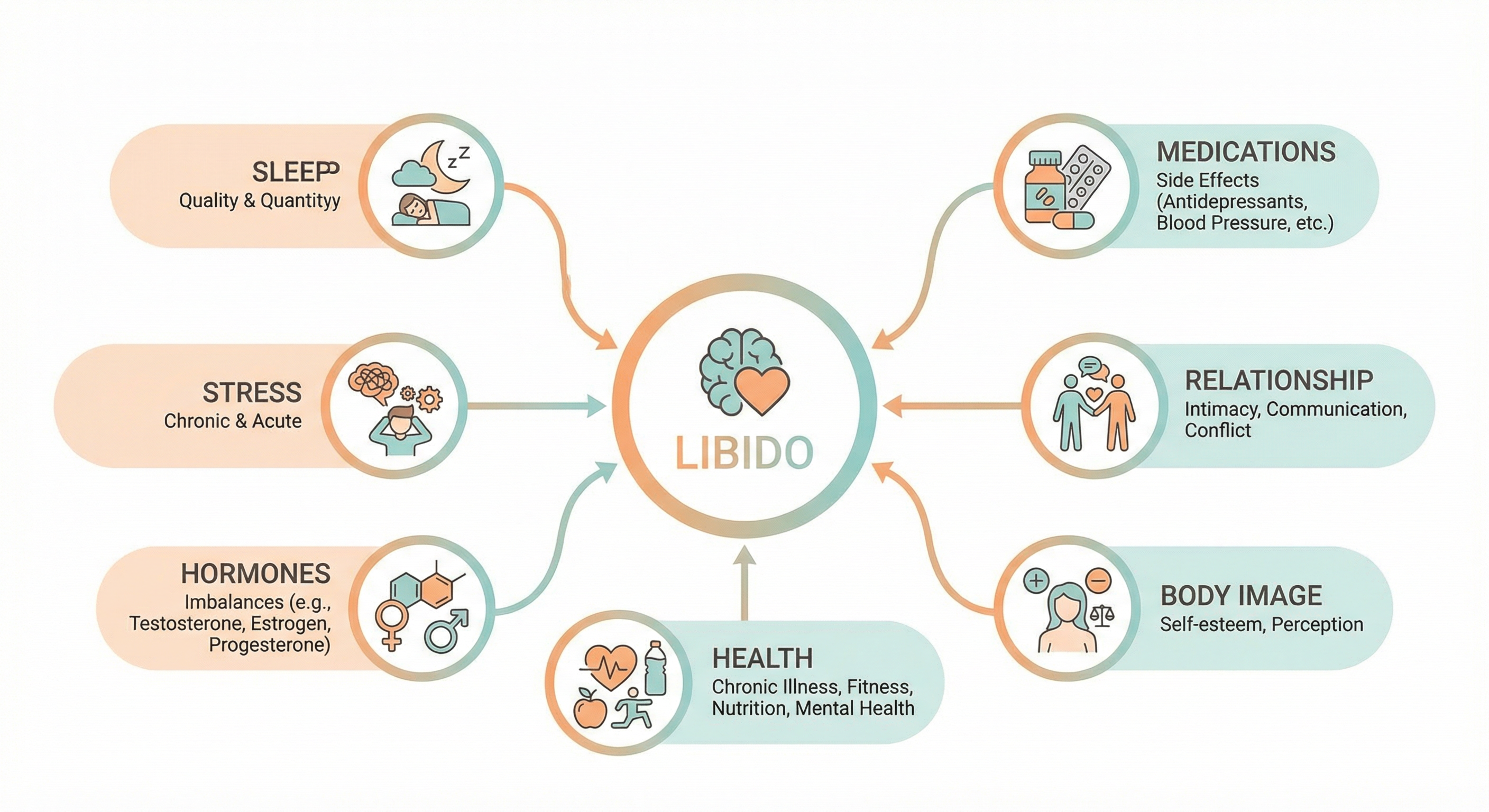
🧬 Biological
- Hormone levels (testosterone, estrogen)
- Age and life stage
- Health conditions
- Medications
- Fatigue and sleep
- Pain during sex
🧠 Psychological
- Stress and anxiety
- Depression
- Body image
- Past trauma
- Beliefs about sex
- Mental load/overwhelm
💑 Relational
- Relationship satisfaction
- Emotional connection
- Communication quality
- Unresolved conflicts
- Feeling desired
- Trust and safety
🏠 Contextual
- Privacy and opportunity
- Young children at home
- Work stress
- Life transitions
- Cultural/religious factors
- Time and energy
Boosting Your Libido
Address the Basics First
😴 Sleep
Sleep deprivation tanks libido. Aim for 7-9 hours. Sleep disorders affect hormones and energy. If you're exhausted, sex will feel like another chore.
😰 Stress
Chronic stress elevates cortisol, which suppresses sex hormones. Find stress management that works for you - exercise, meditation, boundaries, therapy.
🏃 Exercise
Regular physical activity boosts testosterone, improves body image, increases energy, and reduces stress. Even a 20-minute walk helps.
💊 Review Medications
Many medications affect libido: antidepressants (especially SSRIs), blood pressure meds, birth control pills, and others. Ask your doctor about alternatives.
🥗 Nutrition
Eat a balanced diet. Zinc (oysters, pumpkin seeds), omega-3s (fish), and foods that support cardiovascular health all support sexual function.
🍷 Moderate Alcohol
A little may lower inhibitions, but too much impairs arousal and performance. Chronic heavy drinking significantly reduces libido.
Psychological & Relational Strategies
Reignite Your Mind
- Prioritize intimacy: Schedule it if needed - planned sex is still valid sex
- Fantasize: Allow yourself to think about sex - read erotica, daydream
- Reduce mental load: Share household responsibilities so you're not exhausted
- Address body image: Work on accepting and appreciating your body
- Process past issues: Therapy can help with trauma, shame, or anxiety
Strengthen Your Connection
- Non-sexual touch: Hugging, cuddling, massage - connection without pressure
- Quality time: Date nights, conversations, shared experiences
- Express appreciation: Feeling valued increases desire
- Resolve conflicts: Unaddressed resentment kills libido
- Communicate about sex: Share what you want, what's not working
The Dual Control Model
Sexual arousal has both "accelerators" (things that turn you on) and "brakes" (things that turn you off). Boosting libido isn't just about pressing the accelerator - you also need to release the brakes. What are YOUR brakes? Stress? Feeling unsexy? Resentment? Address those.
In the Moment
Creating Context for Desire
- Set the scene: Comfortable environment, privacy, no distractions
- Start with what you enjoy: Maybe that's a massage, a bath, or kissing
- Give yourself permission to warm up: Arousal often comes AFTER starting, not before
- Focus on pleasure, not outcome: Take orgasm off the table - just enjoy sensations
- Use aids if helpful: Lubricant, vibrators, erotica
- Try something new: Novelty can spark interest
Sensate Focus
A technique developed by sex therapists:
- Take turns touching each other (non-genital at first)
- Focus purely on sensation, not arousal or performance
- Gradually include more intimate touch over sessions
- Removes pressure and rebuilds connection
Desire Discrepancy
When partners have different levels of desire, it can cause stress for both:
For the Lower-Desire Partner
- Your desire level is valid - you're not broken
- Work on YOUR relationship with sexuality (not just for your partner)
- Communicate openly about what affects your desire
- Consider whether responsive desire might be your pattern
- Rule out medical causes if desire has changed
For the Higher-Desire Partner
- Their low desire isn't about you or a rejection of you
- Pressure and guilt make desire LOWER, not higher
- Focus on creating conditions for desire, not demanding it
- Explore solo sexuality without resentment
- Consider what your partner needs to feel desire
Together
- Find a compromise frequency you both can accept
- Explore non-intercourse intimacy
- Schedule intimacy so lower-desire partner can mentally prepare
- Consider couples therapy if it's causing significant conflict
When to See a Professional
Consider seeking help if:
- Low desire is causing you distress
- Desire changed suddenly or significantly
- It's affecting your relationship
- You have other symptoms (fatigue, mood changes, pain)
- Self-help strategies haven't worked
Who Can Help
- Doctor/Gynecologist: Rule out medical causes, check hormones, review medications
- Sex Therapist: Address psychological factors, relationship issues, learn techniques
- Couples Counselor: Work through relationship dynamics affecting desire
- Individual Therapist: Address trauma, anxiety, depression
Good News
Low libido is very treatable. Most people see improvement when they address the underlying causes. You don't have to accept a sex life that doesn't satisfy you.