Understanding Painful Sex
Pain during sex (dyspareunia) is more common than you might think. Up to 75% of women experience painful intercourse at some point. While occasional mild discomfort can happen, persistent or severe pain is not normal and deserves attention.
Important Message
Sex should not hurt. If it does, your body is telling you something needs attention. Don't "push through" pain or assume it's normal. There are solutions.
Types of Pain
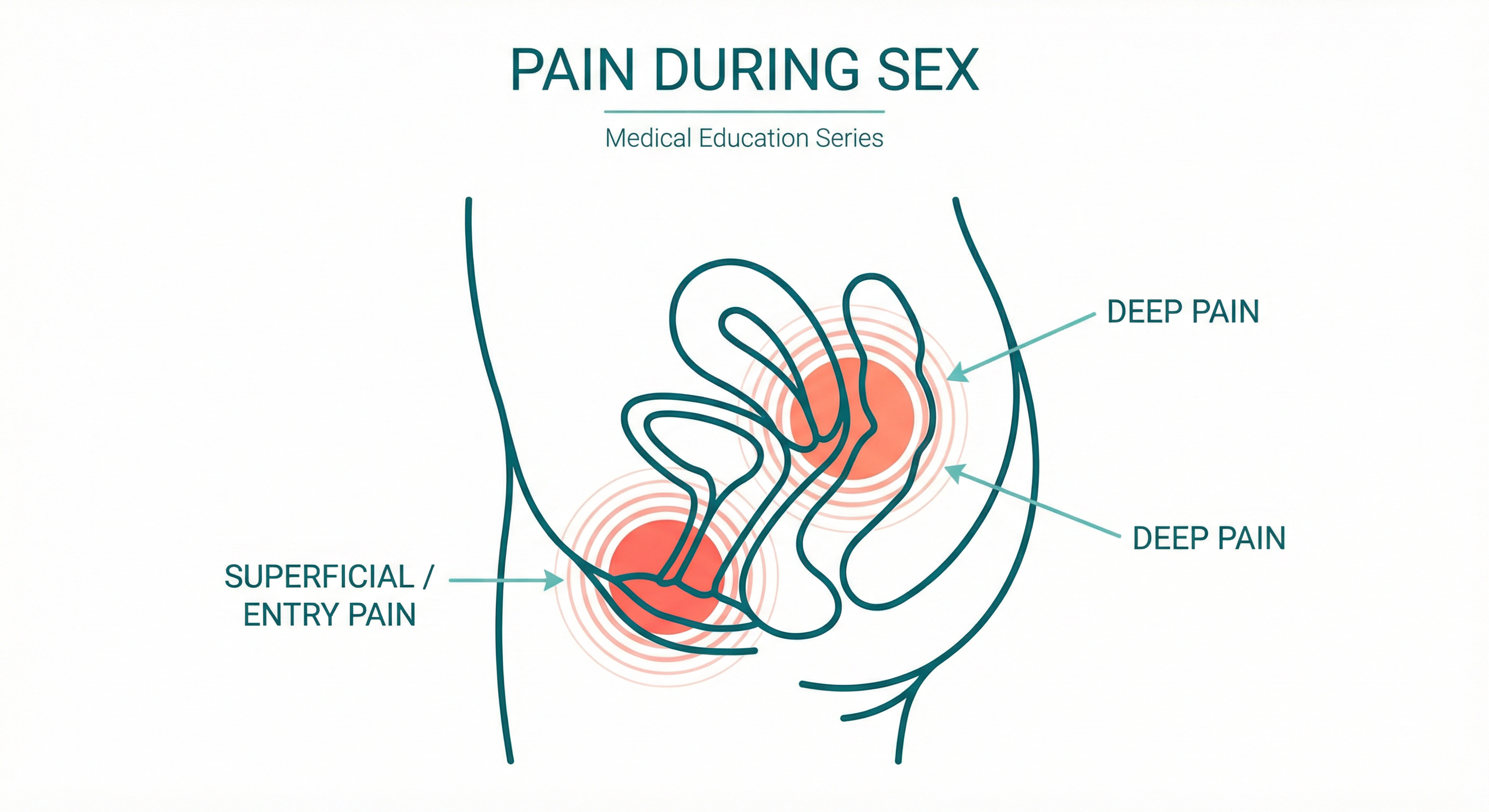
Entry Pain (Superficial)
Pain at the vaginal opening during initial penetration
- Often related to lubrication, skin conditions, or vaginismus
- May feel like burning, stinging, or tightness
- Can make penetration difficult or impossible
Deep Pain
Pain felt deeper inside during thrusting
- Often related to internal conditions (endometriosis, cysts, etc.)
- May be worse in certain positions
- Can feel like cramping, aching, or sharp pain
Pain After Sex
Discomfort that continues after intercourse
- Can be aching, burning, or cramping
- May last minutes to hours
- Can be related to various causes
Common Causes
Insufficient Lubrication
- Most common cause of painful sex
- Can result from not enough foreplay
- Hormonal changes (menopause, breastfeeding, birth control)
- Medications (antihistamines, antidepressants)
- Dehydration
- Anxiety or stress
Infections
- Yeast infections
- Bacterial vaginosis
- Sexually transmitted infections
- Urinary tract infections
- Often accompanied by discharge, odor, or itching
Skin Conditions
- Lichen sclerosus
- Eczema or dermatitis
- Allergic reactions (condoms, lubricants, soaps)
- Vulvodynia (chronic vulvar pain)
Structural/Physical
- Endometriosis
- Ovarian cysts
- Fibroids
- Pelvic inflammatory disease
- Tilted uterus
- Scarring from surgery or childbirth
Psychological
- Vaginismus (muscle tightening)
- Anxiety about sex
- Past trauma or abuse
- Relationship problems
- Depression
Hormonal
- Menopause (vaginal atrophy)
- Breastfeeding
- Low estrogen
- Certain birth control methods
Solutions to Try
💧 Use Lubricant Generously
This solves the most common cause of painful sex. Use water-based lubricant applied to both partners. Reapply as needed during sex. More is better - you can't use too much!
⏰ Spend More Time on Foreplay
Arousal causes natural lubrication, increased blood flow, and vaginal expansion. Spend at least 15-20 minutes on foreplay before penetration. If you're not feeling aroused, wait.
🗣️ Communicate with Your Partner
Tell them what hurts, what helps, and what you need. Guide them on speed, depth, and angle. Ask them to stop or slow down when needed.
🔄 Try Different Positions
Some positions allow more control over depth and angle. Woman-on-top positions give the receiving partner control. Shallow penetration positions may help if deep thrusting hurts.
🧘 Relax Your Body
Tension causes muscles to tighten. Deep breathing, relaxation techniques, and feeling emotionally safe can help. Never have sex when you're tense, anxious, or not in the mood.
🩺 Check for Infections
If you have unusual discharge, odor, itching, or burning, see a doctor. Many infections are easily treatable but won't go away on their own.
Remember
Penetration isn't the only form of intimacy. If penetration is painful, explore other ways to be intimate while you address the underlying cause. There's no rush.
Pain During Menopause
Vaginal dryness and pain during sex are very common after menopause due to declining estrogen levels. This causes vaginal atrophy - thinning, drying, and inflammation of the vaginal walls.
Solutions for Menopausal Pain
- Vaginal moisturizers: Use regularly (not just during sex) to maintain vaginal moisture
- Water-based lubricants: Use generously during sexual activity
- Vaginal estrogen: Prescription creams, rings, or tablets that restore tissue health locally
- Regular sexual activity: Helps maintain vaginal elasticity and blood flow
- Pelvic floor exercises: Maintain muscle tone and blood flow
Good News
Vaginal estrogen is very effective and safe for most women, with minimal systemic absorption. It can restore comfort within weeks. Talk to your doctor about options.
Pain During Sex for Men
While less common than in women, men can also experience painful sex.
Common Causes in Men
- Phimosis: Tight foreskin that doesn't retract easily
- Frenulum breve: Short frenulum causing pain during sex
- Infections: STIs, yeast infections, balanitis
- Prostatitis: Inflammation of the prostate
- Peyronie's disease: Curved erection due to scar tissue
- Skin conditions: Eczema, psoriasis, allergic reactions
Solutions
- See a doctor for proper diagnosis
- Use plenty of lubricant
- Practice proper hygiene
- Check for infections or skin conditions
- Consider circumcision for severe phimosis (discuss with doctor)
When to See a Doctor
See a healthcare provider if:
- Pain persists despite trying home remedies
- Pain is severe or getting worse
- You have unusual discharge, odor, or itching
- You experience bleeding after sex
- Pain affects your quality of life or relationships
- You have other symptoms (fever, pelvic pain outside of sex)
- You've experienced trauma and need support
What to Expect at the Appointment
- Questions about your symptoms, when they occur, and your medical history
- A pelvic exam (may be modified if painful)
- Possibly swabs to test for infections
- Possibly imaging (ultrasound) if internal issues are suspected
- Discussion of treatment options
Remember
Most causes of painful sex are treatable. Don't suffer in silence - help is available. You deserve comfortable, pleasurable intimacy.