Is Sex Safe During Pregnancy?
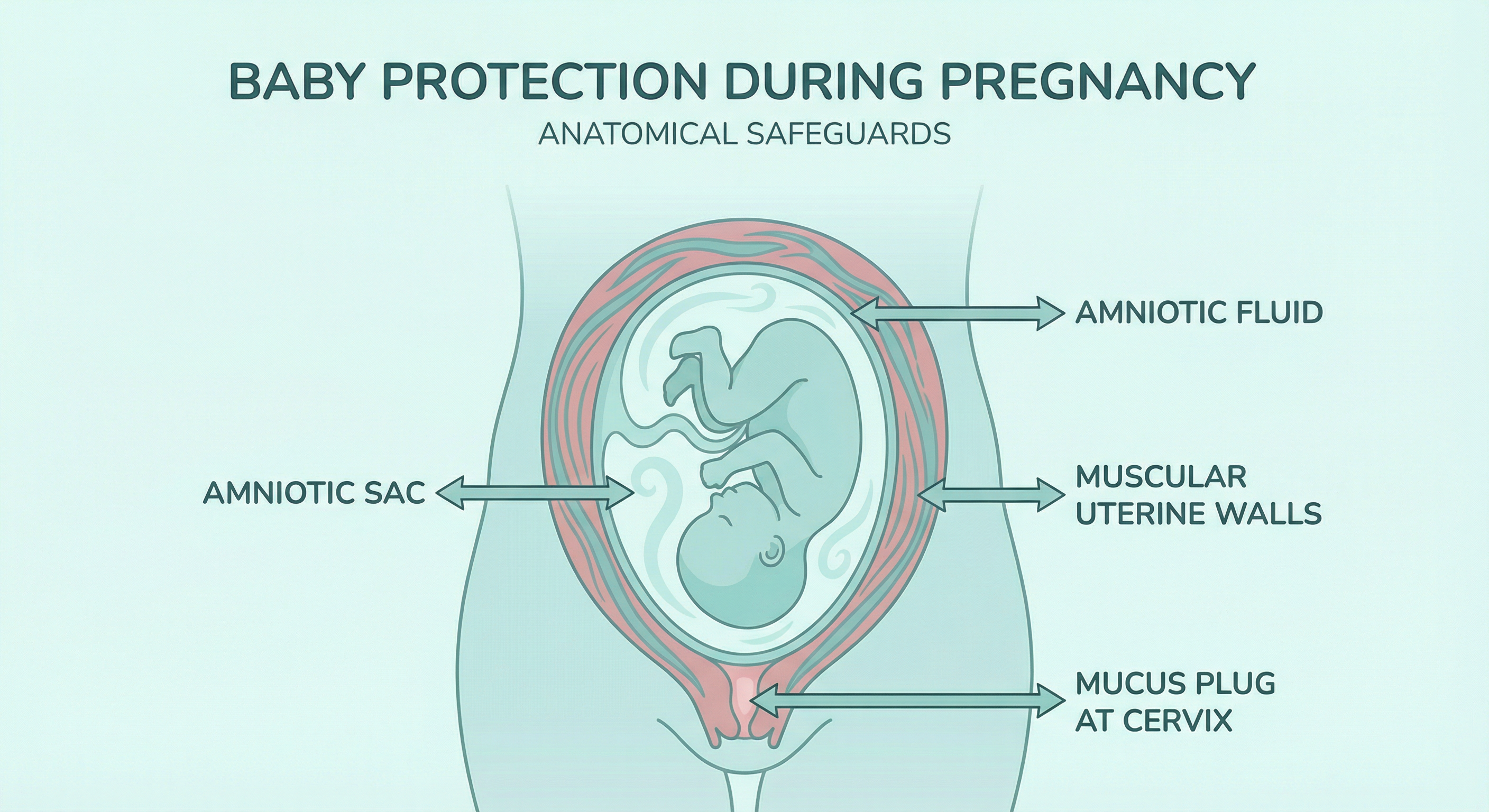
For most healthy pregnancies, yes - sex is completely safe throughout pregnancy. Your baby is protected by the amniotic sac, strong uterine muscles, and a thick mucus plug sealing the cervix.
Baby is Protected
The penis does not reach the baby during sex. The baby is cushioned in the amniotic fluid and cannot be "bumped" or harmed by intercourse. Orgasms may cause mild uterine contractions, but these are normal and not the same as labor contractions.
Benefits of Sex During Pregnancy
- Maintains emotional connection with partner
- Relieves stress and improves mood (endorphins!)
- Can help with better sleep
- Keeps pelvic floor muscles toned
- May strengthen the relationship
- Increased blood flow can make orgasms more intense
When to Avoid Sex
In some situations, your doctor may advise against sex during pregnancy:
- Placenta previa - Placenta covering the cervix
- Cervical insufficiency - Cervix opening prematurely
- Risk of preterm labor - History or current signs
- Unexplained vaginal bleeding
- Leaking amniotic fluid
- Water has broken - Risk of infection
- Multiple pregnancy - Twins/triplets (sometimes restricted in later stages)
- History of miscarriage - Your doctor may advise caution in first trimester
Always Ask Your Doctor
If you have any pregnancy complications or concerns, discuss sexual activity with your healthcare provider. They can give you specific guidance based on your situation.
Sex Through Each Trimester
First Trimester (Weeks 1-12)
How you might feel: Exhausted, nauseous, tender breasts, emotional
- Desire may decrease due to fatigue and nausea
- Breast tenderness may make touch uncomfortable
- Completely safe unless doctor advises otherwise
- Some spotting after sex is normal but mention to doctor
- Don't feel guilty if you're not in the mood - it's temporary
Second Trimester (Weeks 13-27)
How you might feel: More energetic, less nauseous, "glowing"
- Often called the "honeymoon trimester" - many feel their best
- Increased blood flow can heighten sensitivity and orgasms
- Breast tenderness usually improves
- Belly growing but not yet uncomfortable
- Many women experience increased desire
Third Trimester (Weeks 28-40)
How you might feel: Heavy, uncomfortable, anticipating baby
- Finding comfortable positions becomes challenging
- Fatigue returns, desire may decrease
- Braxton Hicks contractions may increase after orgasm (normal)
- Creativity with positions is helpful
- Non-penetrative intimacy becomes more appealing for some
- Sex does NOT induce labor unless you're already ready
Comfortable Positions
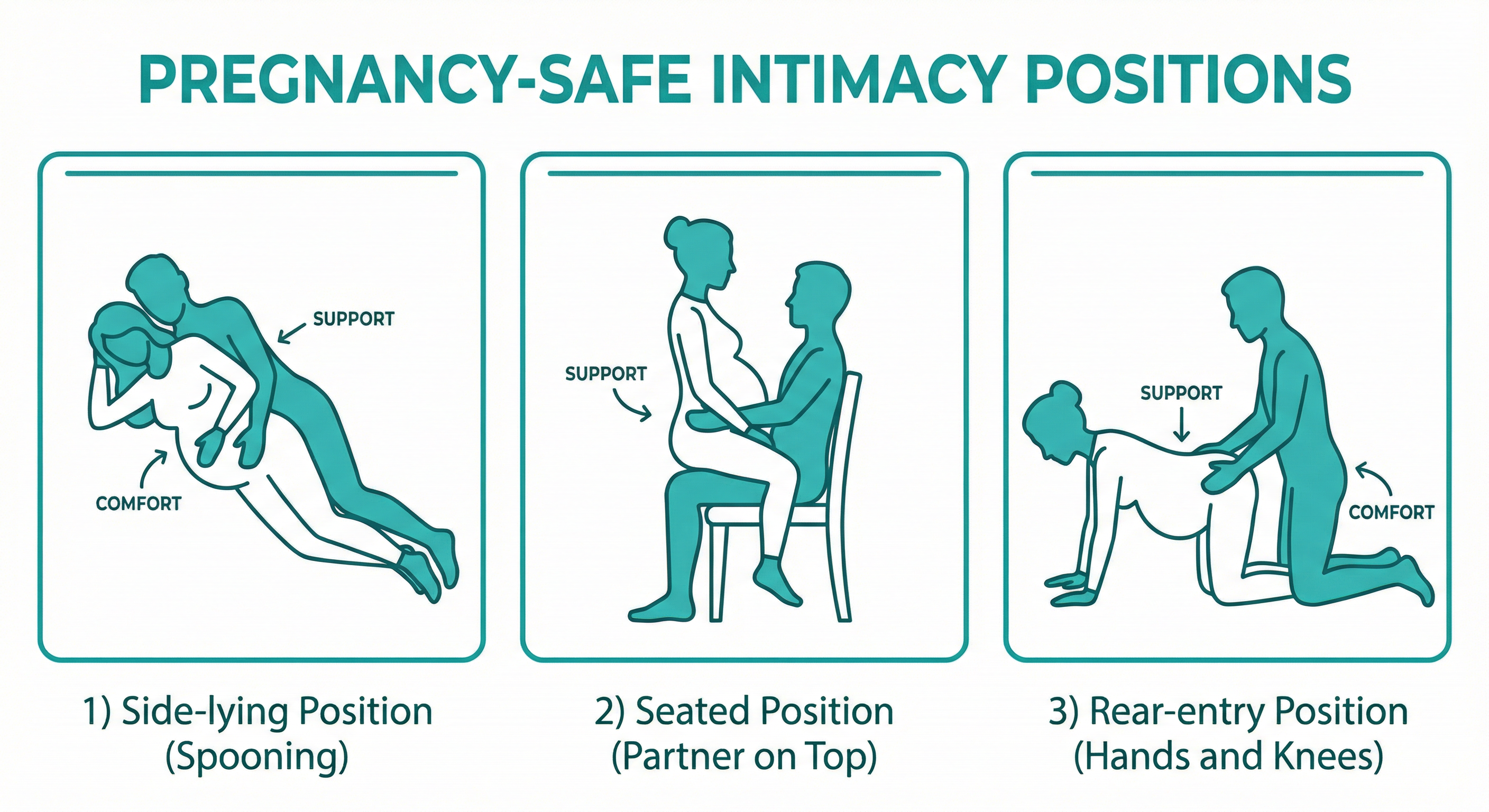
As your belly grows, you'll need to adapt. Here are pregnancy-friendly positions:
🛏️ Side-by-Side (Spooning)
Both lying on your sides, partner behind. No pressure on belly, shallow penetration, intimate.
🧎♀️ Woman on Top
You control the depth, angle, and pace. No pressure on belly. Good throughout pregnancy.
🪑 Edge of Bed
Lie on back at edge, partner stands. Works early-mid pregnancy. Avoid lying flat later.
🐕 Hands and Knees
On all fours, partner behind. No belly pressure. Use pillows for support if needed.
🪑 Seated
Partner seated in sturdy chair, you face away or toward them. Good for later pregnancy.
🛋️ Rear Entry Standing
Lean on furniture, partner behind. Good when belly is large.
Tips for Comfort
- Use plenty of pillows for support
- Avoid lying flat on your back after 20 weeks (can restrict blood flow)
- Take your time and communicate
- Don't worry if you need to stop and readjust
- Use lubricant if needed (pregnancy can cause dryness or increased discharge)
Common Concerns
Can orgasm cause miscarriage or labor?
No. While orgasm causes mild uterine contractions, these are temporary and not the same as labor contractions. In a healthy pregnancy, orgasm will not cause miscarriage or preterm labor.
What about oral sex?
Oral sex is generally safe during pregnancy. One important warning: Partners should never blow air into the vagina, as this could theoretically cause an air embolism (very rare but potentially dangerous).
Is bleeding after sex normal?
Light spotting after sex can be normal due to increased blood flow to the cervix. However, always tell your doctor about any bleeding. Heavy bleeding, persistent bleeding, or bleeding with pain needs immediate attention.
What if I have no desire for sex?
Completely normal. Fatigue, body changes, hormones, and anxiety about the baby can all affect desire. Communicate with your partner about other forms of intimacy. This phase is temporary.
What about other forms of intimacy?
If penetration is uncomfortable or advised against, there are many other ways to be intimate: massage, oral sex, mutual masturbation, cuddling, or simply emotional closeness.
STI Prevention During Pregnancy
If there's any risk of STIs (new partner, partner with other partners), protection is crucial:
- STIs can be transmitted to the baby during pregnancy or delivery
- Some STIs can cause serious complications (HIV, herpes, syphilis, etc.)
- Use condoms if there's any risk
- Get tested early in pregnancy and again if needed
New Partners
If you have a new sexual partner during pregnancy or your partner has other partners, always use condoms. The risk to your baby from an STI is serious.
For Partners
- Be patient: Her body is going through massive changes
- Don't take rejection personally: Hormones, fatigue, and discomfort are real
- Initiate non-sexual intimacy: Massage, cuddling, words of affirmation
- Ask what she needs: Don't assume - communicate
- Be flexible: What worked before may not work now
- Express desire: Many pregnant women feel unattractive; reassure her
- No pressure: If she's not in the mood, respect it completely
After Baby Arrives
Most doctors recommend waiting 4-6 weeks after delivery before resuming sex, to allow for healing. But there's no rush - wait until both of you feel ready physically and emotionally.
- Vaginal dryness is common (especially if breastfeeding) - use lubricant
- Things may feel different at first - that's normal
- Start slowly and communicate
- Discuss contraception - you can get pregnant before your period returns
Remember
Your relationship is about more than sex. The transition to parenthood is huge. Focus on connection, communication, and supporting each other. Intimacy will return in time.