Overview
Sexual dysfunction refers to persistent problems during any phase of the sexual response cycle that prevent satisfaction from sexual activity. These are common, treatable conditions that affect people of all ages.
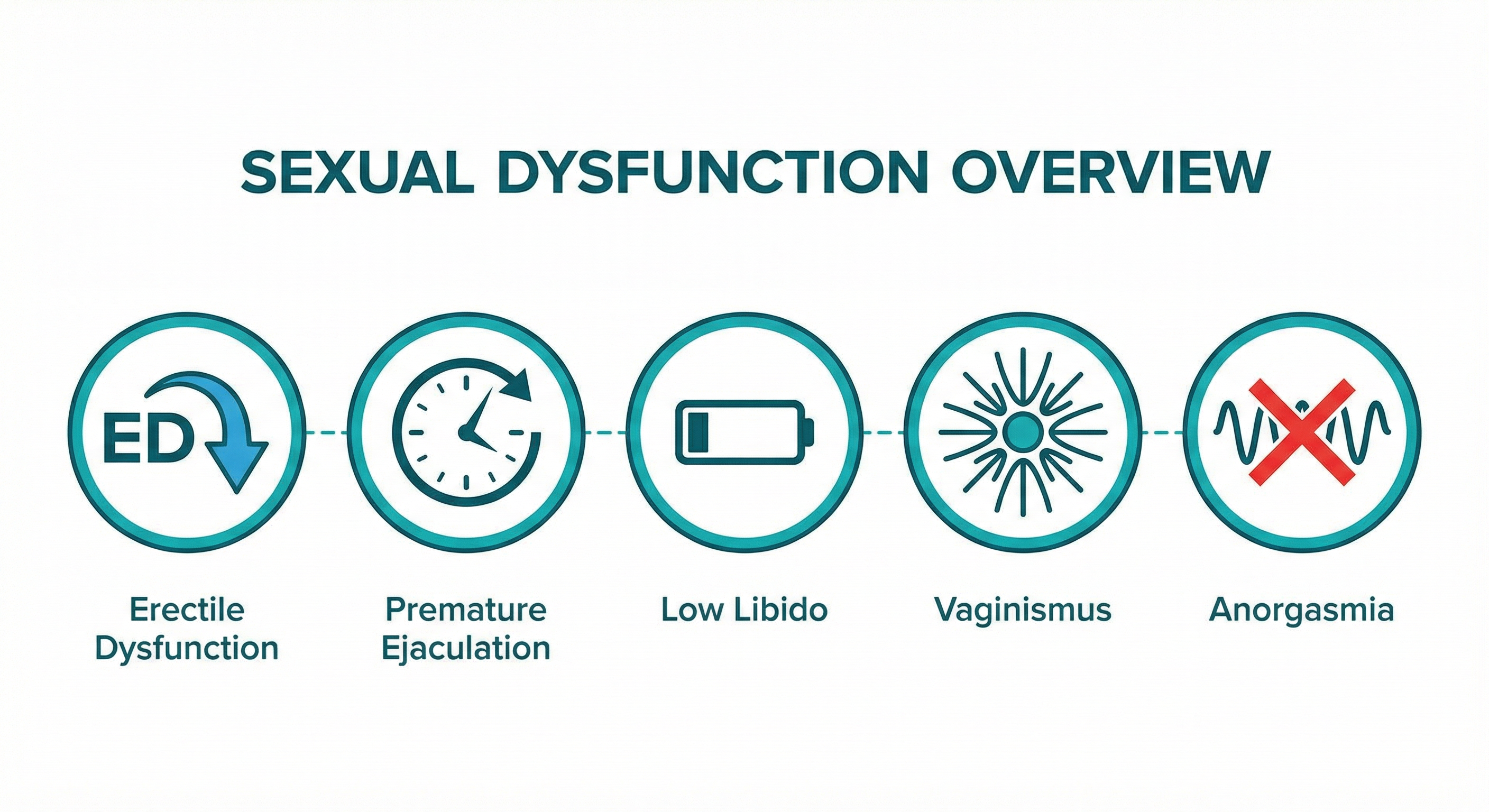
How Common Is It?
- 43% of women experience some form of sexual dysfunction
- 31% of men experience some form of sexual dysfunction
- These numbers increase with age but can occur at any age
- Most cases are treatable with proper care
Erectile Dysfunction (ED)
Erectile dysfunction is the inability to get or maintain an erection firm enough for satisfactory sexual intercourse. Occasional difficulty is normal; persistent problems need attention.
Types
- Primary ED: Never been able to achieve/maintain erection (rare, often physical)
- Secondary ED: Was able before but now has difficulty (more common)
- Situational ED: Occurs only in certain situations (often psychological)
Causes
Physical Causes
- Heart disease
- Diabetes
- High blood pressure
- Obesity
- Low testosterone
- Certain medications
- Smoking/alcohol
Psychological Causes
- Performance anxiety
- Stress
- Depression
- Relationship issues
- Past trauma
- Porn-induced ED
Treatment Options
- Medications: PDE5 inhibitors (Sildenafil/Viagra, Tadalafil/Cialis) - prescription only
- Lifestyle changes: Exercise, weight loss, quit smoking, reduce alcohol
- Therapy: Sex therapy or counseling for psychological causes
- Vacuum devices: Mechanical pumps to create erection
- Hormone therapy: If low testosterone is the cause
- Treat underlying conditions: Diabetes, heart disease management
Important
ED can be an early warning sign of cardiovascular disease. If you're young and healthy but experiencing ED, see a doctor for cardiovascular screening.
Premature Ejaculation (PE)
Premature ejaculation occurs when a man ejaculates sooner during sexual intercourse than desired - typically within 1-2 minutes of penetration. It's the most common male sexual dysfunction.
Types
- Lifelong (primary): Has always occurred since first sexual experience
- Acquired (secondary): Developed after previously normal ejaculation
Causes
Psychological
- Performance anxiety
- Stress/depression
- Guilt about sex
- Relationship problems
- Early sexual experiences
Biological
- Abnormal hormone levels
- Inflammation of prostate
- Thyroid problems
- Inherited traits
- Nerve damage
Treatment Options
- Behavioral techniques:
- Start-stop method: Stop stimulation before ejaculation, wait, resume
- Squeeze technique: Squeeze head of penis when close to ejaculation
- Masturbate before sex: May reduce urgency
- Medications: Certain SSRIs (off-label), topical numbing creams
- Therapy: Sex therapy or couples counseling
- Pelvic floor exercises: Strengthening can improve control
- Condoms: Thicker condoms or those with numbing agents
Partner Involvement
Treatment is most successful when partners are involved. Focus on intimacy beyond penetration. Many couples find that reducing pressure and expanding their sexual repertoire helps significantly.
Low Libido (Low Sexual Desire)
Low libido is a decreased interest in sexual activity. It's common and can affect anyone, though it's more frequently reported by women. Libido naturally fluctuates, but persistent low desire may need attention.
Causes in Women
Physical
- Hormonal changes (menopause, postpartum)
- Medical conditions
- Medications (antidepressants, birth control)
- Fatigue/illness
- Pain during sex
Psychological
- Stress and anxiety
- Depression
- Body image issues
- Relationship problems
- History of trauma
Causes in Men
Physical
- Low testosterone
- Medications
- Chronic illness
- Obesity
- Sleep disorders
Psychological
- Stress and overwork
- Depression
- Relationship issues
- Performance anxiety
- Porn addiction
Treatment Options
- Address underlying causes: Treat depression, change medications, manage stress
- Hormone therapy: Testosterone (men) or estrogen (women) if levels are low
- Lifestyle changes: Exercise, sleep, reduce alcohol, healthy diet
- Therapy: Individual or couples counseling
- Sensate focus: Exercises to rebuild intimacy without pressure
- Communication: Open dialogue with partner about needs
Vaginismus
Vaginismus is involuntary tightening of the vaginal muscles when penetration is attempted, making intercourse painful or impossible. It's a treatable condition.
Types
- Primary: Has always been present - penetration has never been possible
- Secondary: Develops after previously normal sexual function
- Global: Occurs in all situations (sex, tampons, exams)
- Situational: Occurs only in certain situations
Causes
- Fear of pain or penetration
- Anxiety about sex
- Past sexual trauma or abuse
- Painful first sexual experience
- Strict upbringing about sex being "wrong"
- Relationship issues
- Medical conditions (infections, childbirth trauma)
Treatment (Very Effective!)
- Pelvic floor physical therapy: Learning to relax and control muscles
- Vaginal dilators: Gradually sized inserts to gently desensitize (done at your own pace)
- Sex therapy/counseling: Address psychological components
- Kegel exercises: Learning to both tighten AND relax muscles
- Education: Understanding anatomy and the condition
- Partner involvement: Gradual, pressure-free intimacy
Good News
Vaginismus is highly treatable with near 100% success rates when proper treatment is followed. It takes time and patience, but most women overcome it completely.
Anorgasmia (Difficulty Reaching Orgasm)
Anorgasmia is the persistent difficulty or inability to achieve orgasm despite adequate sexual stimulation and arousal. It's more common in women but affects men too.
Types
- Lifelong: Has never experienced orgasm
- Acquired: Could orgasm before but now can't
- Situational: Can orgasm in some situations but not others
- Generalized: Can't orgasm in any situation
Causes
Physical
- Medical conditions (MS, diabetes)
- Medications (SSRIs, blood pressure meds)
- Hormonal changes
- Nerve damage
- Pelvic surgery
Psychological
- Anxiety and stress
- Depression
- Body image issues
- Guilt/shame about sex
- Past trauma
- Relationship problems
Treatment Options
- Sex therapy: Address psychological barriers, learn techniques
- Self-exploration: Learning your body through masturbation
- Communication: Guiding partner on what feels good
- Vibrators: Can help women who need more intense stimulation
- Medication changes: If SSRIs are the cause, alternatives exist
- Mindfulness: Staying present during sex rather than "spectatoring"
- Reduce pressure: Focus on pleasure, not orgasm as a goal
For Women
Most women don't orgasm from penetration alone - this is normal anatomy, not dysfunction. 70-80% of women need clitoral stimulation to orgasm. Not being able to orgasm from intercourse alone is completely normal.
When to See a Doctor
- The problem is causing distress to you or your relationship
- It's persistent (not just occasional)
- You're experiencing pain
- You notice other symptoms (fatigue, mood changes, physical changes)
- Over-the-counter attempts haven't helped
Talking to Your Doctor
It can feel embarrassing, but doctors are trained for these conversations. Be specific about symptoms, when they started, and how they affect you. Bring your partner if comfortable. Many sexual dysfunctions have simple, effective treatments.