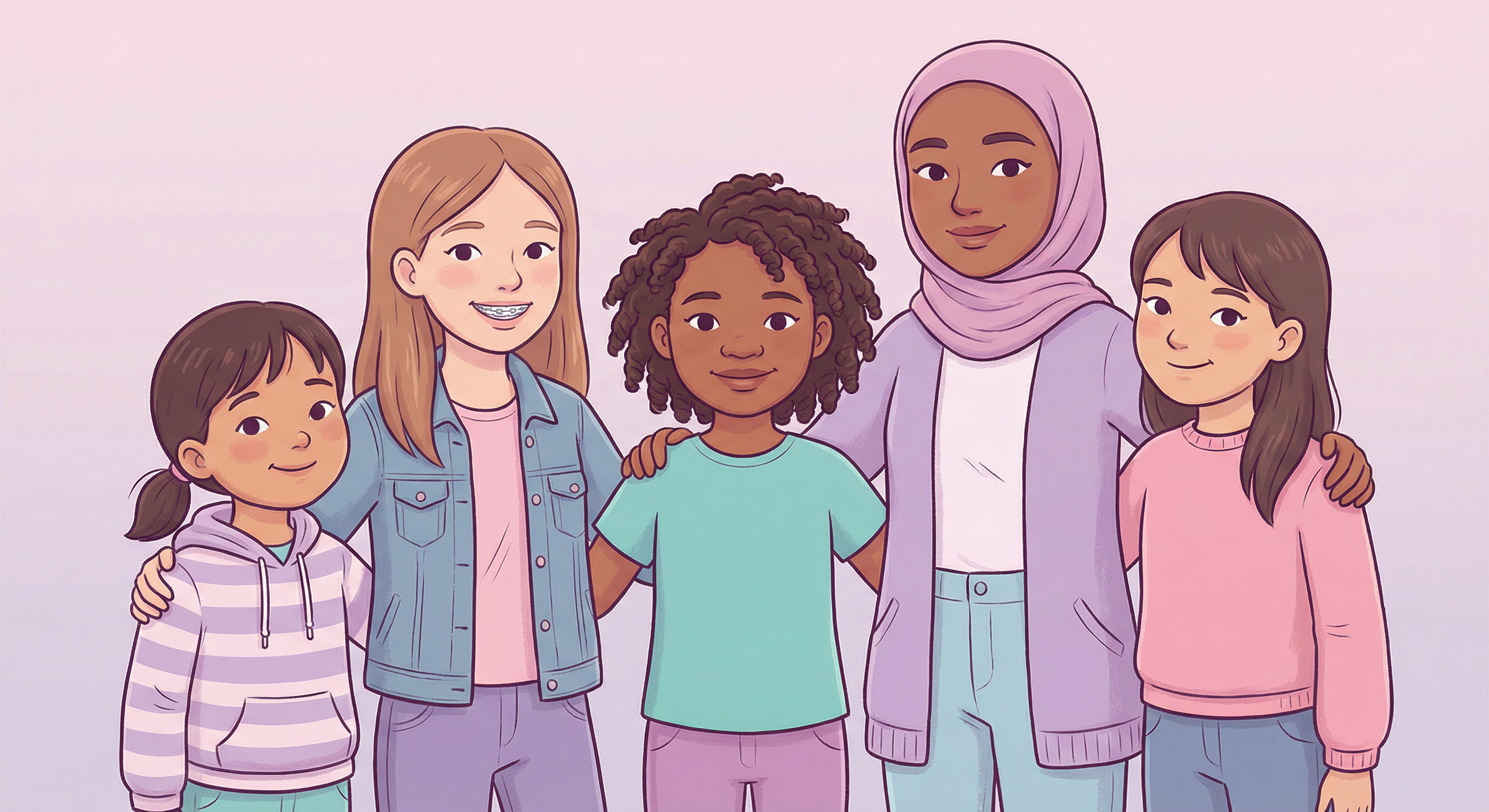
Growing Up is Natural
Puberty is a normal part of growing up. Understanding the changes helps young girls feel confident and prepared. This guide is for both girls and their parents.
In many Indian families, puberty remains a hushed topic, leaving girls unprepared for the changes they experience. Open conversations help girls feel supported rather than confused or ashamed. This guide provides accurate information to help navigate this important transition.
What is Puberty?
Puberty is the time when a girl's body begins changing into a woman's body. It's triggered by hormones (chemical messengers) that signal your body to start developing.
Key Facts
- When does it start? Usually between ages 8-13, but every girl is different
- How long does it last? The entire process takes 2-5 years
- Is it the same for everyone? No, each girl develops at her own pace
- Is it normal to start early or late? Yes, there's a wide range of "normal"
Remember
Starting puberty earlier or later than friends doesn't mean anything is wrong. Bodies have their own timeline. However, if puberty starts before age 8 or hasn't started by age 14, consult a doctor.
Physical Changes
Puberty brings many physical changes. Knowing what to expect helps you feel prepared.
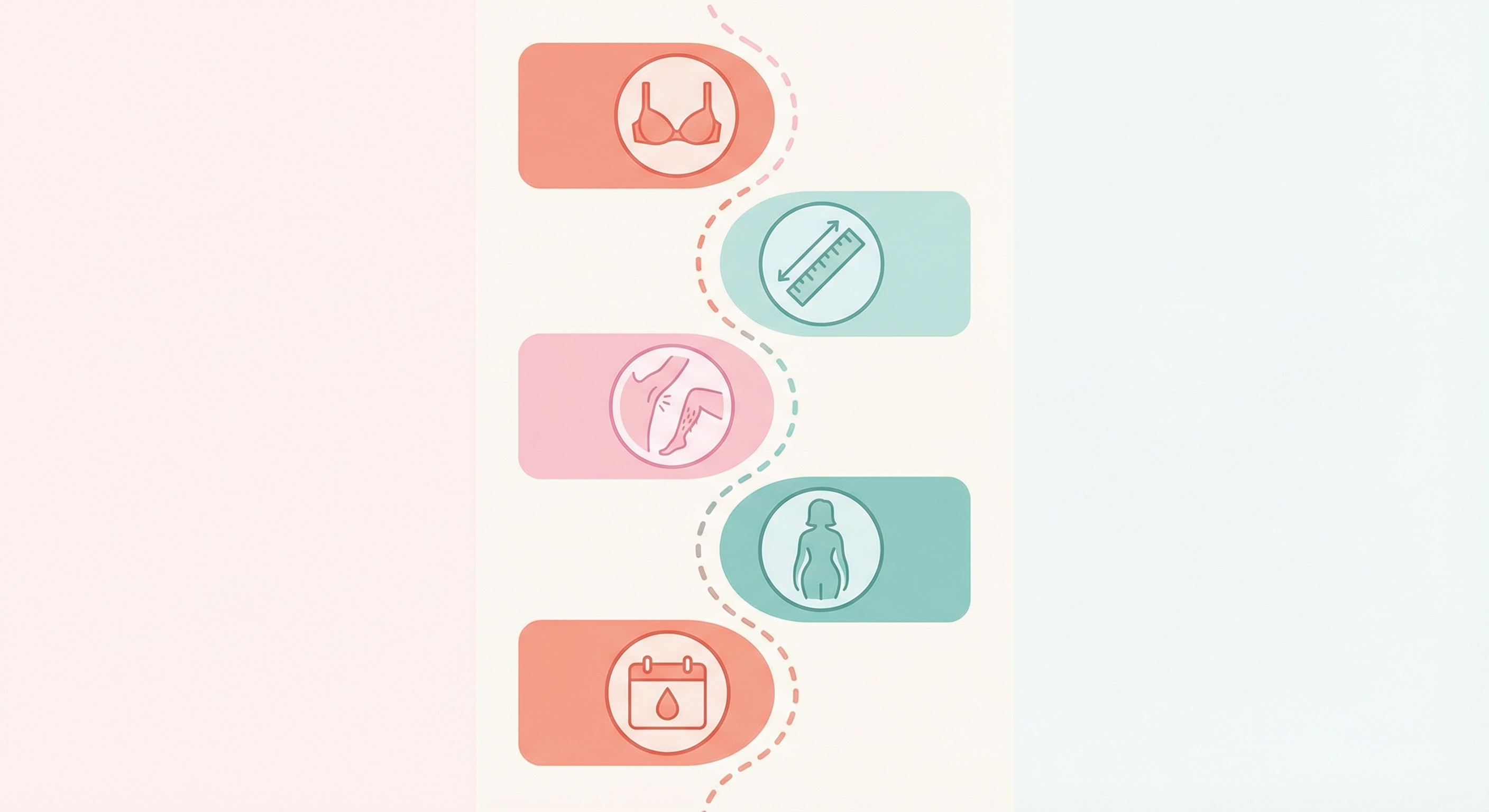
The stages of puberty happen gradually over several years
Timeline of Changes
Breast Development
Small bumps (breast buds) appear under the nipples. One side may develop before the other - this is normal. Full development takes several years.
Growth Spurt
You may grow 2-3 inches taller in a year. Hands and feet often grow first, which might feel awkward temporarily.
Body Hair
Hair begins growing in the pubic area and underarms. It starts soft and gets thicker over time.
Body Shape Changes
Hips widen, waist becomes more defined. Some weight gain is normal and healthy - your body needs it for development.
Skin & Sweat Changes
Skin becomes oilier, pimples may appear. You sweat more and body odour develops. This is why daily bathing and deodorant become important.
First Period (Menarche)
Menstruation begins. Average age in India is 12-13, but anywhere from 9-16 can be normal.
Understanding Periods (Menstruation)
Getting your period is a sign that your body is healthy and developing normally. Here's what you need to know:
What is a Period?
Each month, your body prepares for a possible pregnancy by building a soft lining in the uterus (womb). If pregnancy doesn't happen, this lining sheds through the vagina. This is your period.
What to Expect
- Duration: Typically 3-7 days
- Cycle length: Usually 21-35 days (counted from the first day of one period to the first day of the next)
- Flow: Heavier in the first 2-3 days, then lighter
- Colour: Can range from bright red to dark brown - all normal
First Periods are Often Irregular
It's completely normal for periods to be irregular for the first 1-2 years. Your body is still adjusting. Keep track of your periods to notice your pattern.
Track Your Period
Use a calendar, diary, or period tracking app to note when your period starts and ends. This helps you predict future periods and notice if something seems unusual.
Period Products
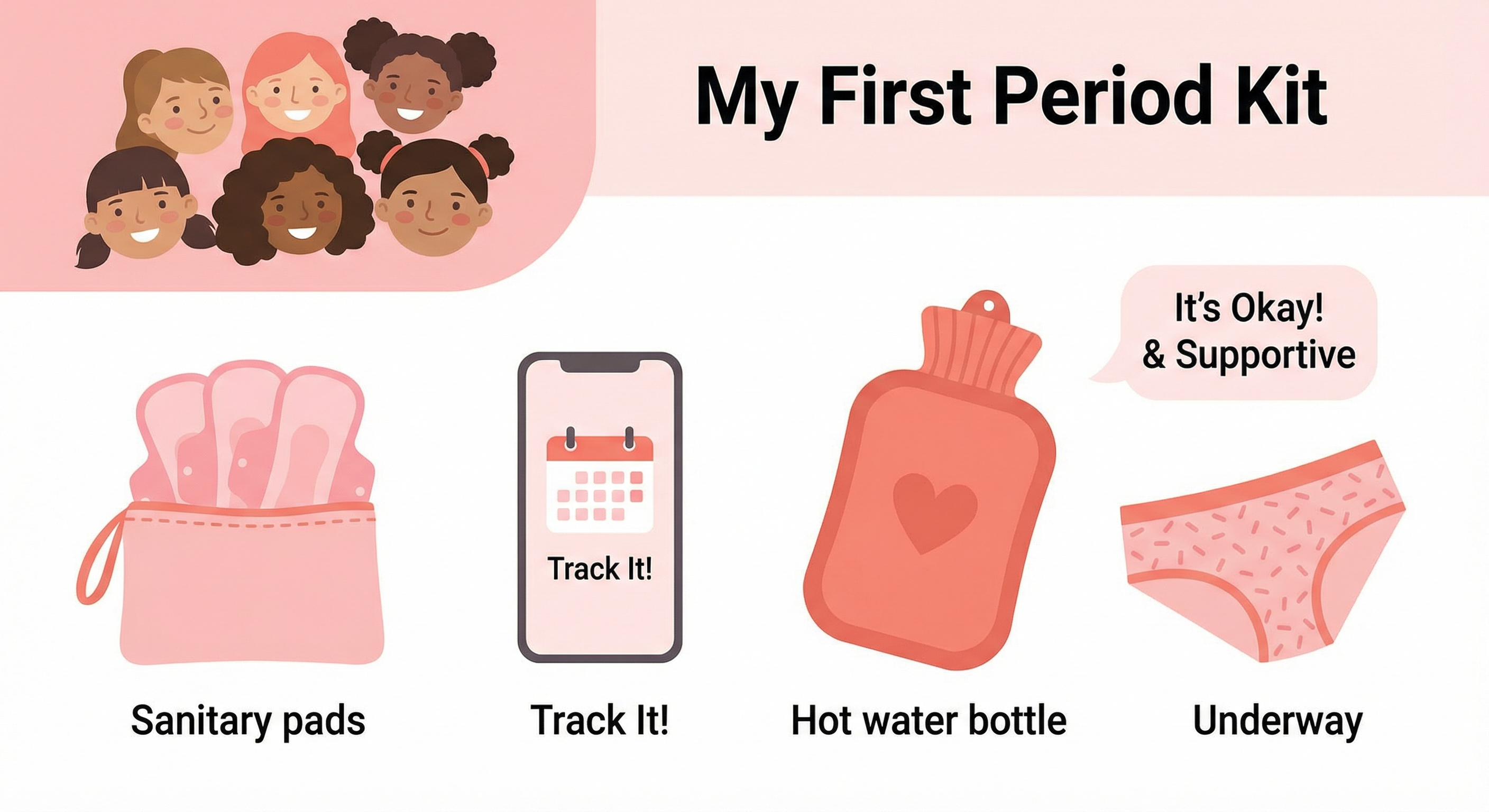
Being prepared makes managing your period easier
Sanitary Pads
- Most common choice for beginners
- Stick to underwear
- Available in different sizes for different flows
- Change every 4-6 hours
- Use wings for better protection
Other Options (for later)
- Tampons: Worn inside the vagina
- Menstrual cups: Reusable, eco-friendly
- Period underwear: Absorbent underwear
- These can be explored as you get more comfortable
Managing Period Discomfort
- Cramps: Use a hot water bottle on your lower belly, gentle exercise helps, pain relievers if needed
- Bloating: Reduce salt intake, drink plenty of water
- Mood changes: Normal due to hormones. Rest, light exercise, and talking to someone helps
- Headaches: Stay hydrated, rest when needed
When to See a Doctor
- Periods are extremely painful (affecting school/daily life)
- No period by age 15
- Periods suddenly stop for more than 3 months
- Bleeding lasts more than 7 days or is very heavy
- Severe mood changes affecting daily life
Emotional Changes
Puberty doesn't just change your body - it affects your emotions too. This is completely normal!
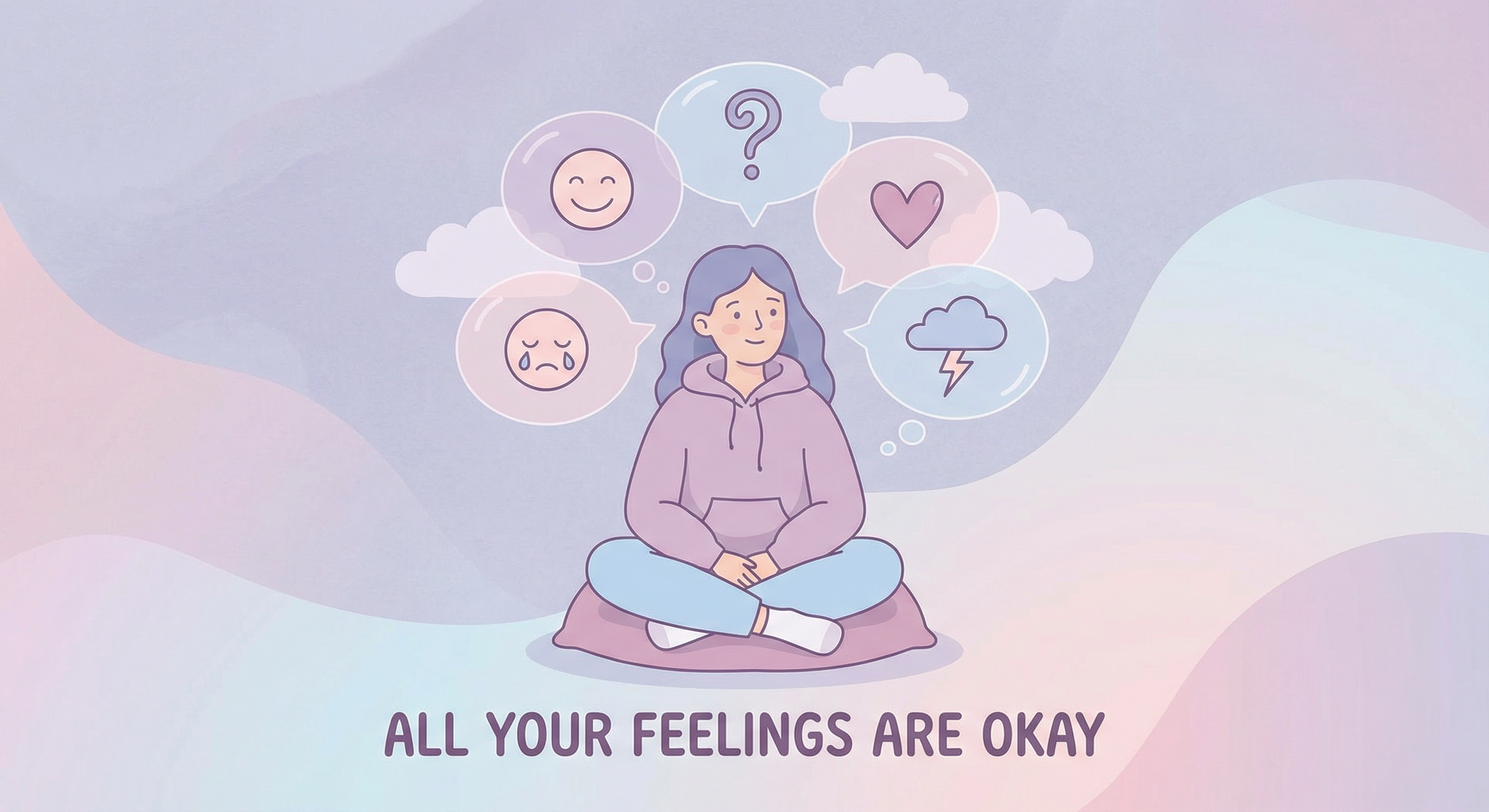
It's normal to experience many different emotions during puberty
What You Might Feel
- Mood swings: Feeling happy one moment and sad the next
- Sensitivity: Things that didn't bother you before might upset you now
- Self-consciousness: Worrying about how you look or what others think
- New feelings: Curiosity about relationships, attraction to others
- Need for privacy: Wanting more personal space
- Confusion: Feeling unsure about changes happening to you
These Feelings are Normal
Hormones affect your brain and emotions. Feeling overwhelmed sometimes is part of growing up. Talk to a trusted adult if feelings become too difficult to handle.
Coping Strategies
- Talk to a parent, older sibling, aunt, or trusted adult
- Write in a journal to express feelings
- Exercise - it releases mood-boosting chemicals
- Get enough sleep (8-10 hours for teenagers)
- Spend time with friends who make you feel good
- Remember: this phase passes, and it gets easier
Personal Hygiene
As your body changes, your hygiene routine needs to change too.
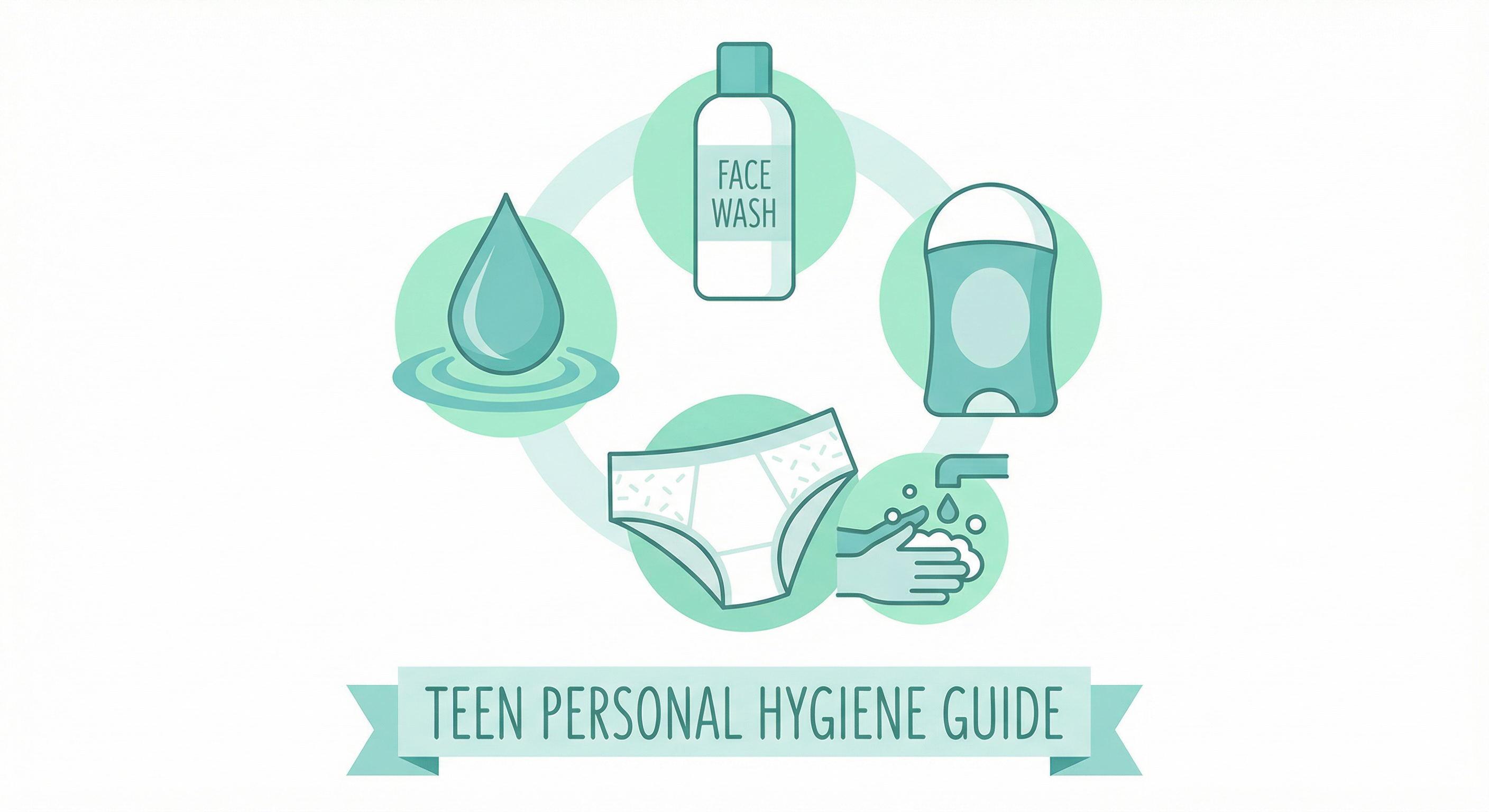
Essential hygiene habits for growing teens
Daily Habits
- Bathe or shower daily, especially during periods
- Use deodorant or antiperspirant for underarms
- Wash face twice daily (morning and night) to prevent acne
- Wear clean underwear daily - cotton is best
- Change sanitary products every 4-6 hours during periods
- Wash hands before and after changing period products
- Clean intimate area with plain water (no soap inside)
Dealing with Acne
- Wash face with gentle cleanser (not regular soap)
- Don't touch or pick at pimples
- Drink plenty of water
- Eat a balanced diet with fruits and vegetables
- If acne is severe, consult a doctor
Intimate Hygiene
- The vagina cleans itself - no need for internal washing
- Wash external area (vulva) with water only
- Avoid scented products near intimate areas
- Wipe front to back after using the toilet
- Wear breathable cotton underwear
Body Image & Self-Esteem
It's common to feel uncertain about your changing body. Here's how to build a positive relationship with yourself:
Every body is unique - focus on what makes you happy and confident
Important Truths
- Everyone develops differently: Comparing yourself to friends or media images isn't helpful
- There's no "perfect" body: Bodies come in all shapes and sizes
- Growth isn't linear: You might feel awkward during changes - this is temporary
- Social media isn't real: Most images are edited or filtered
Building Confidence
- Focus on what your body can do, not just how it looks
- Surround yourself with positive, supportive people
- Limit time on social media if it makes you feel bad
- Try activities that make you feel good (sports, arts, hobbies)
- Practice saying kind things to yourself
For Parents: Supporting Your Daughter
Your support during this time shapes how your daughter views her body and womanhood.
How to Help
- Start early: Begin conversations before puberty starts (around age 8-9)
- Be matter-of-fact: Treat changes as normal, not embarrassing
- Use correct terms: Vagina, breasts, periods - avoiding these words creates shame
- Be available: Let her know she can ask questions anytime
- Share your experience: Your own puberty stories can be reassuring
- Prepare a period kit: Keep supplies ready so she feels prepared
What NOT to Do
- Don't make her feel ashamed of her body or periods
- Don't compare her development to others
- Don't dismiss her feelings as "drama"
- Don't enforce unnecessary restrictions during periods
- Don't treat puberty as a secret or taboo topic
Period Kit Essentials
At Home
- Sanitary pads (regular and overnight)
- Clean underwear
- Hot water bottle for cramps
- Pain relievers (if appropriate)
- Calendar/app for tracking
For School Bag
- 2-3 sanitary pads in a pouch
- Spare underwear
- Wet wipes
- Small plastic bag for disposal
- Pain reliever (with school permission)
Involving Fathers
Fathers can be supportive too! Even if detailed conversations happen with mothers, fathers should be comfortable with the topic and supportive. A father who treats periods as normal helps reduce stigma.
Common Questions
From Girls
Q: My friends have started their periods but I haven't. Is something wrong?
A: No, everyone's body has its own timeline. Periods can start anywhere from 9-16 years. If you haven't started by 15 or have no signs of puberty by 13, see a doctor just to check.
Q: Can I exercise or swim during my period?
A: Yes! Exercise can actually help with cramps. For swimming, you can use tampons or menstrual cups. There's no need to skip activities because of your period.
Q: Is discharge between periods normal?
A: Yes, clear or white discharge is normal and healthy. It's your body's way of keeping the vagina clean. See a doctor only if it's unusually colored, smells bad, or causes itching.
Q: Why are my breasts different sizes?
A: It's completely normal! Most women have slightly different-sized breasts. During development, one may grow faster than the other. They usually even out somewhat over time.
Q: I feel embarrassed about my body changes. Is this normal?
A: Absolutely normal. Many girls feel self-conscious during puberty. Remember that everyone goes through this, and the awkward feelings do pass. Talk to someone you trust if it helps.
A Note on Cultural Practices
In India, many traditions and beliefs surround puberty and menstruation. Here's a balanced perspective:
Celebrating Growing Up
Many families celebrate a girl's first period as a milestone - this positive approach helps girls feel proud rather than ashamed of their bodies.
Addressing Restrictions
Some traditional practices restrict girls during periods (not entering kitchen/temple, etc.). While respecting family traditions:
- Know that medically, periods don't make anyone "impure"
- There's no health reason to restrict activities during periods
- Have respectful conversations with family about which practices feel meaningful versus harmful
- Prioritize your mental health and dignity
The Bottom Line
Menstruation is a normal biological process. A girl on her period is not "dirty" or "impure." Celebrating this milestone while avoiding practices that create shame helps build healthy attitudes for life.
Related Topics
Questions About Puberty?
If you have concerns about your daughter's development or any puberty-related questions, schedule a consultation.
WhatsApp