Understanding what happens in your body during sexual activity helps normalize the experience and can improve intimacy. This guide explains the physiological stages of intercourse with anatomical illustrations.
The Human Sexual Response Cycle
In the 1960s, researchers Masters and Johnson identified four phases of sexual response. This model remains the foundation of our understanding today.
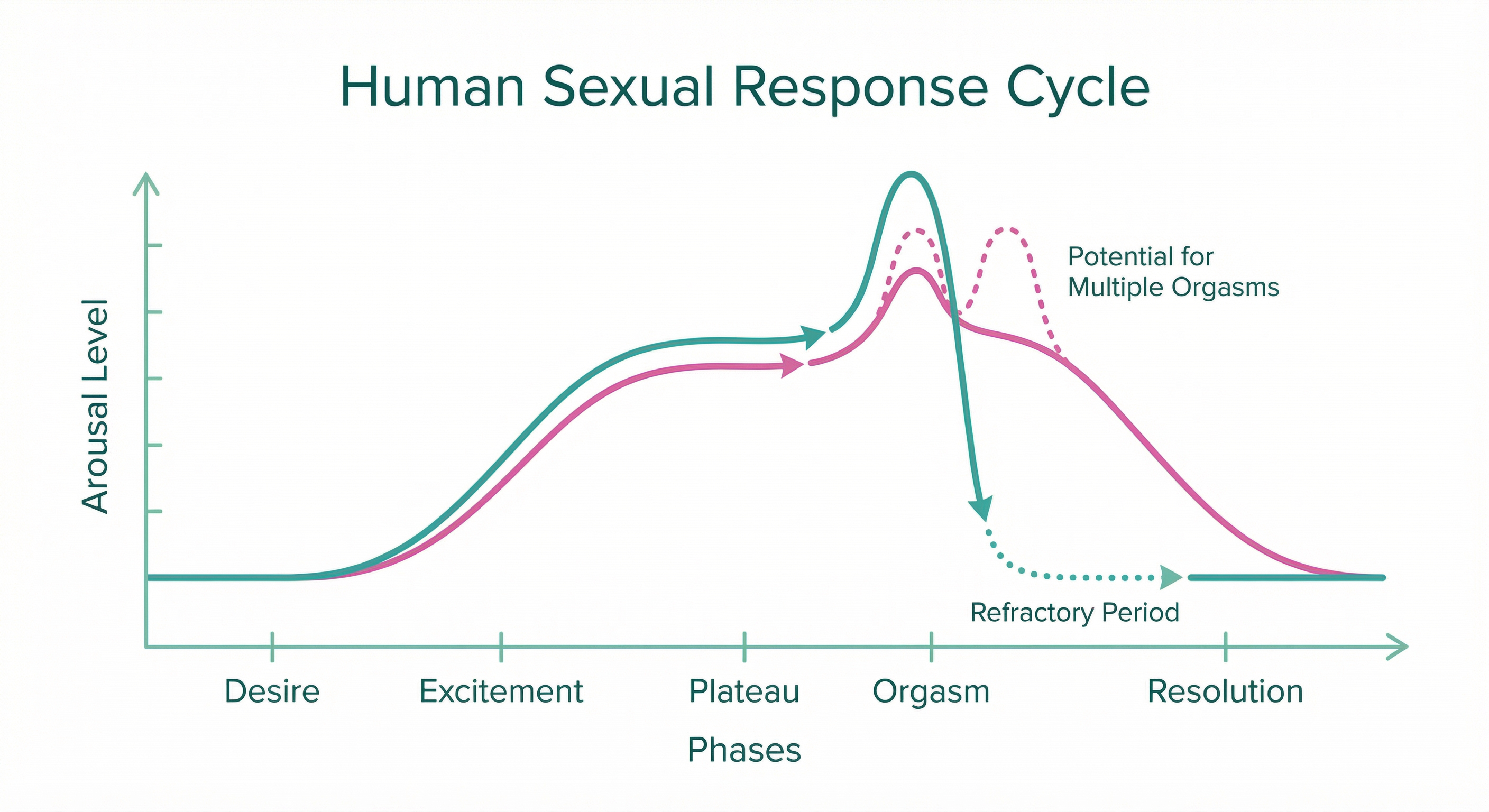
The sexual response cycle showing arousal levels through each phase
Female Response
- Generally takes longer to reach peak arousal
- Can experience multiple orgasms
- No mandatory refractory period
- Arousal may build and plateau multiple times
Male Response
- Often reaches arousal more quickly
- Typically single orgasm followed by refractory period
- Refractory period increases with age
- Can learn to delay orgasm with practice
Arousal / Excitement Phase
Arousal begins with physical or psychological stimulation. The body prepares for sexual activity through increased blood flow to the genitals.
Female Arousal
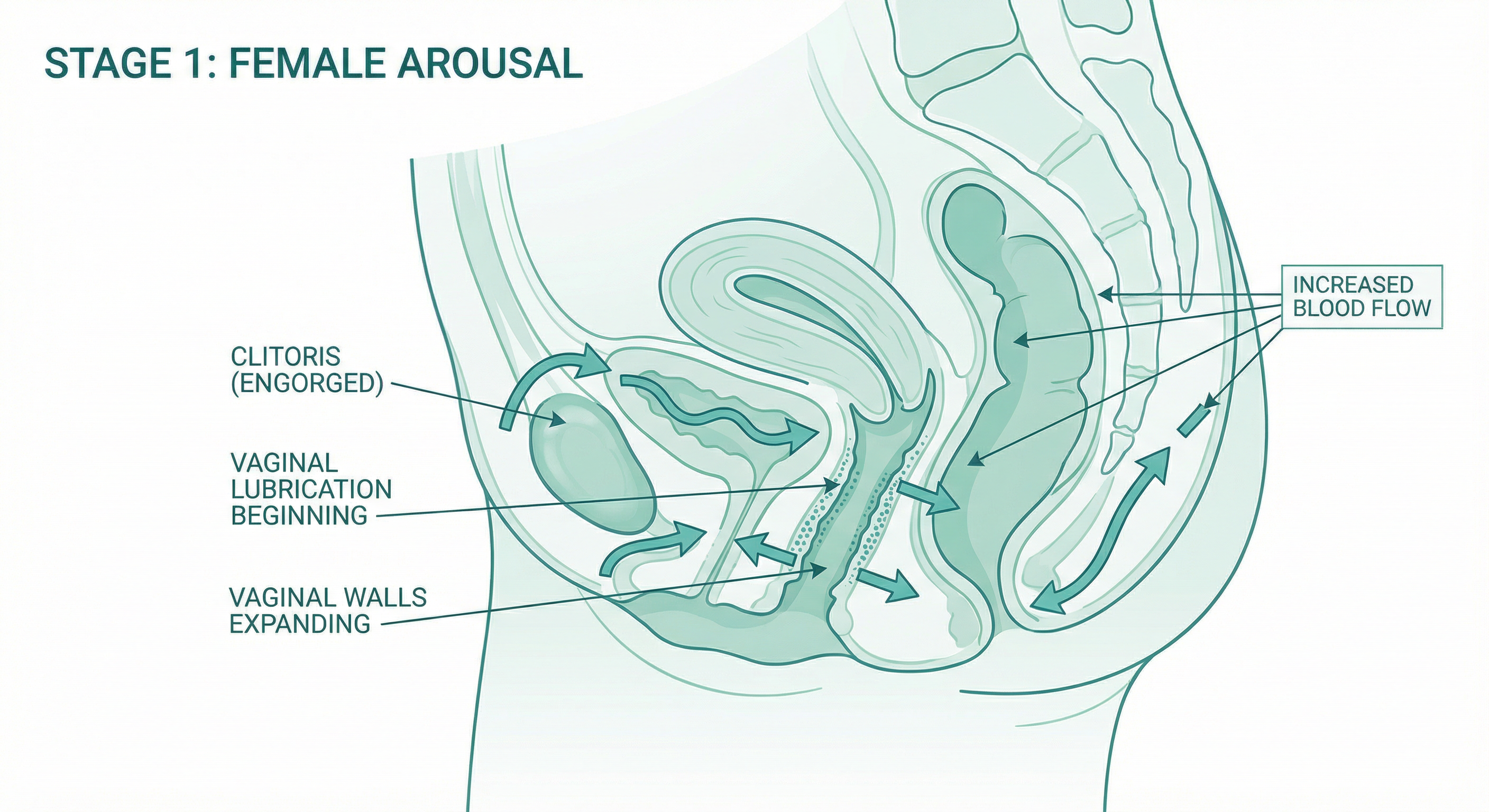
Anatomical changes during female arousal
- Vaginal lubrication: Begins within 10-30 seconds of arousal; fluid seeps through vaginal walls
- Clitoral engorgement: Blood flows to clitoris, causing it to swell and become more sensitive
- Vaginal expansion: Inner two-thirds of vagina expands and lengthens (vaginal tenting)
- Labia changes: Inner and outer lips swell with blood
- Breast changes: Nipples may become erect; breasts may slightly enlarge
- Heart rate & breathing: Both increase
- Skin flush: "Sex flush" may appear on chest and neck
Male Arousal
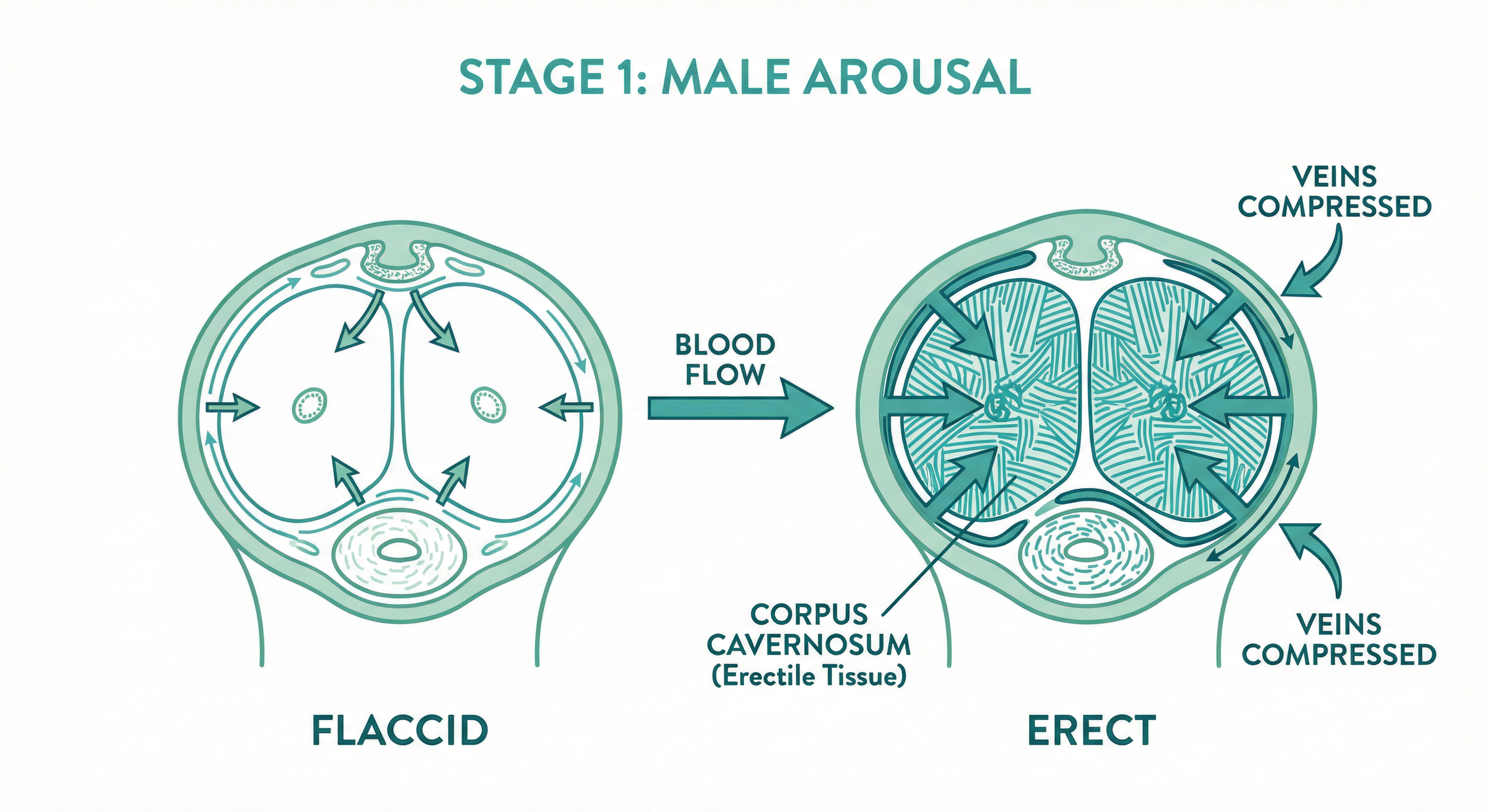
How erection occurs: blood fills erectile tissue
- Erection: Blood fills the corpus cavernosum (erectile tissue) in the penis
- Mechanism: Arteries dilate, veins compress to trap blood, causing rigidity
- Scrotal changes: Scrotum thickens and pulls closer to body
- Testicles: Begin to elevate toward the body
- Pre-ejaculate: Cowper's glands may release clear fluid (can contain sperm)
- Nipples: May become erect
- Heart rate & blood pressure: Increase
Timing Differences
Women often need more time in this phase than men. Adequate foreplay (15-20+ minutes) allows for sufficient lubrication and arousal, making intercourse more comfortable and pleasurable for both partners.
Plateau Phase
Arousal intensifies and stabilizes at a high level. The body is fully prepared for intercourse.
Female Plateau
- Vaginal tenting: Upper vagina fully expanded to accommodate penis
- Orgasmic platform: Outer third of vagina swells, narrowing the opening (grips penis)
- Clitoris retracts: Pulls back under the hood (still sensitive to indirect stimulation)
- Uterus elevates: Lifts up, creating more space in vagina
- Labia color change: Inner lips may deepen in color (increased blood flow)
- Breathing and heart rate: Continue to increase
Male Plateau
- Full erection: Penis reaches maximum size and rigidity
- Testicles: Fully elevated and may increase 50% in size
- Pre-ejaculate: May continue to be released
- Color change: Glans (head) may deepen in color
- Muscle tension: Increases throughout body
- Point of no return: Approaching ejaculatory inevitability
Prolonging Pleasure
The plateau phase can be extended by varying stimulation, changing positions, or briefly pausing. This can lead to more intense orgasms for both partners.
Penetration & Intercourse
When both partners are sufficiently aroused, penetration can occur comfortably.
Initial Penetration
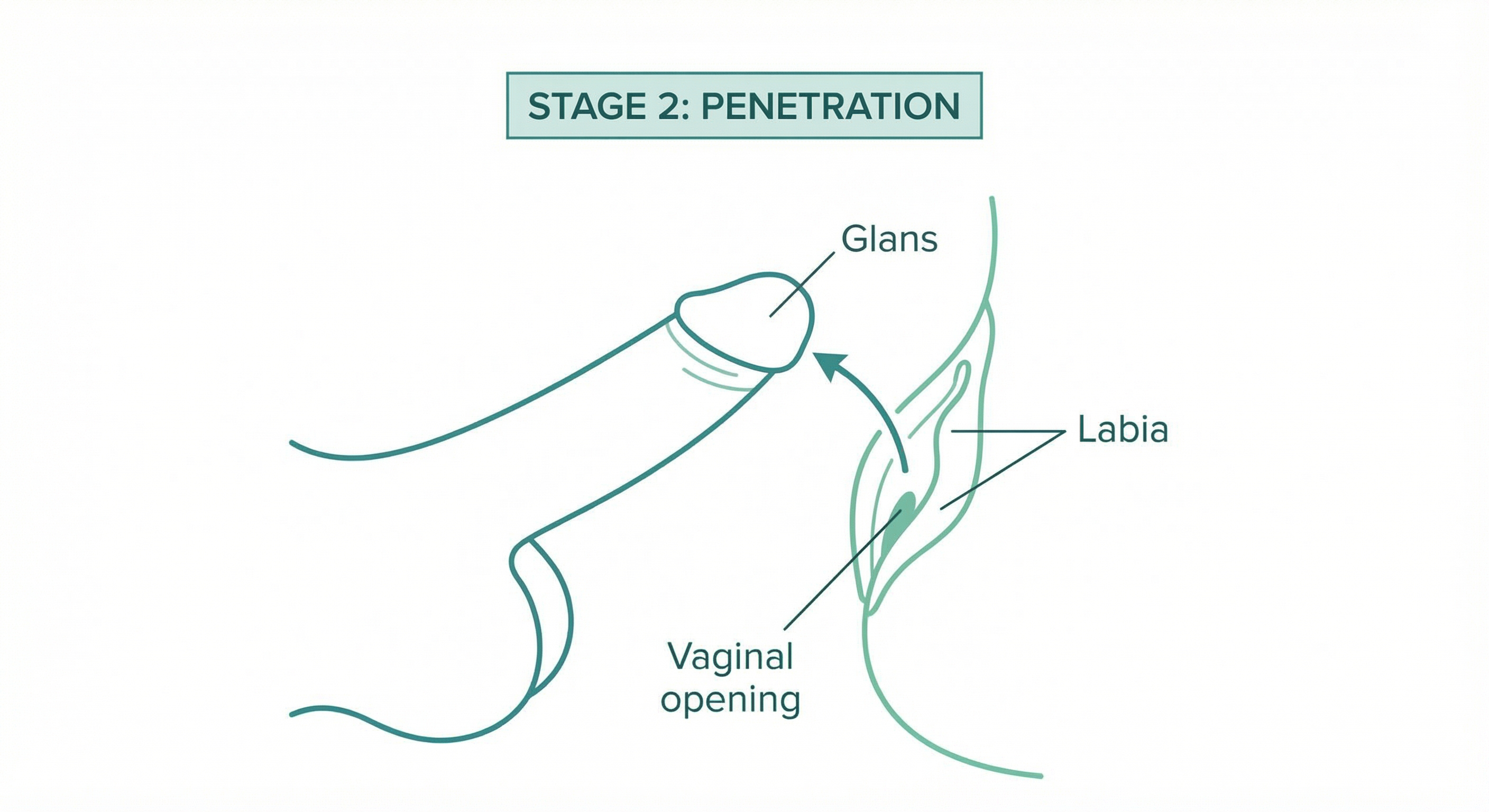
Initial penetration at the vaginal opening
- Alignment: Penis aligned with vaginal opening
- Lubrication: Natural lubrication (or added lubricant) reduces friction
- Gradual entry: Slow, gentle initial penetration allows vagina to accommodate
- Labia: Part to allow entry
- Communication: Partners should communicate about comfort and readiness
During Intercourse
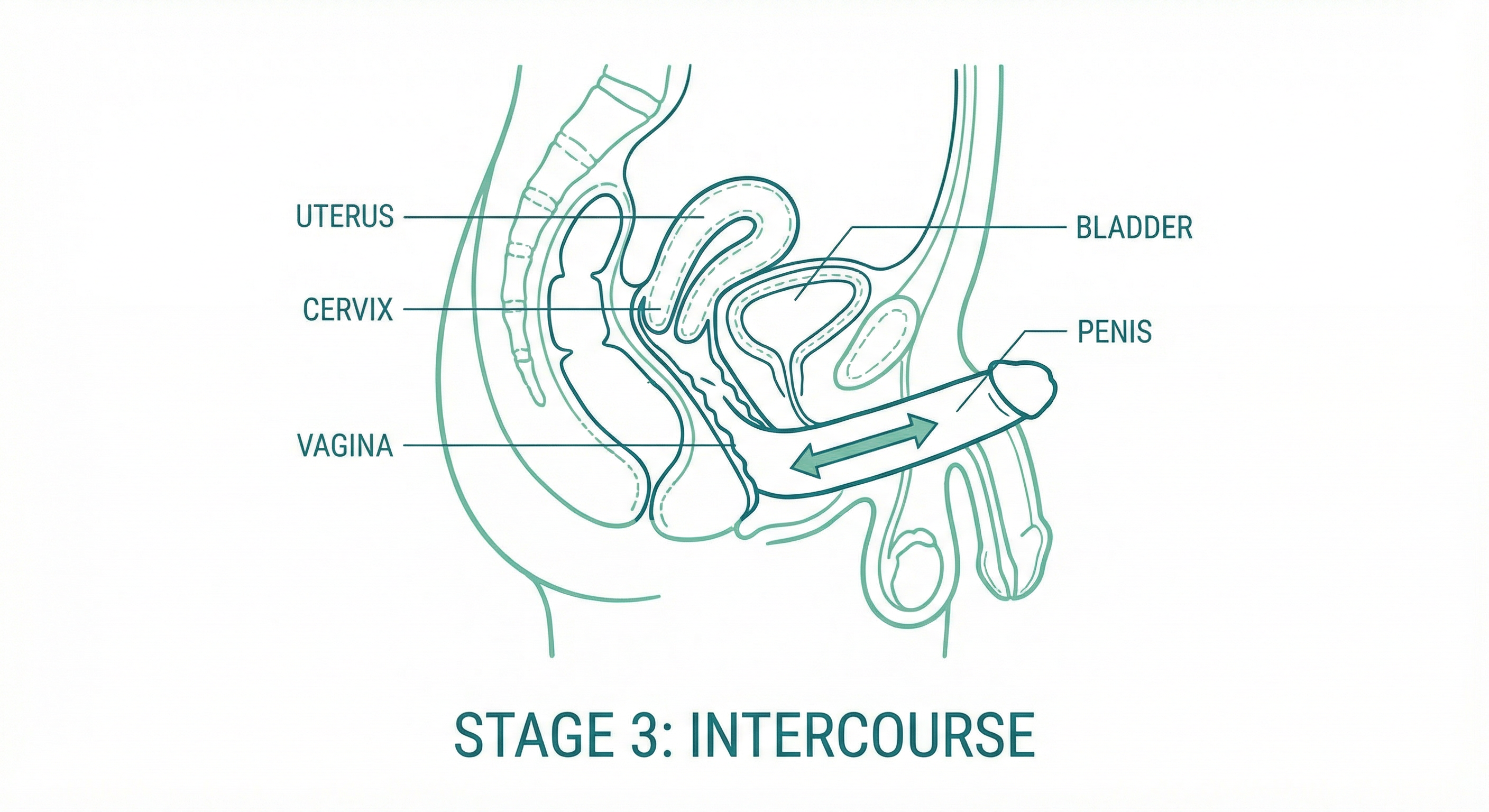
Anatomical cross-section showing penis inside vagina during intercourse
- Vaginal accommodation: Vagina expands to fit penis; walls maintain contact
- Thrusting motion: Creates friction and stimulation for both partners
- Cervix position: Elevated, usually not touched by penis (though some women feel this)
- G-spot stimulation: Certain angles stimulate the G-spot on anterior vaginal wall
- Clitoral stimulation: May occur through grinding or manual stimulation
- Rhythm: Partners often synchronize movements
What She Feels
- Fullness and stretching sensation
- Friction along vaginal walls
- Pressure on G-spot (depending on angle)
- Indirect or direct clitoral stimulation
- Deep pressure (if penis contacts cervix)
What He Feels
- Warmth and wetness
- Friction along shaft
- Pressure from vaginal walls
- Tightening during her arousal/orgasm
- Glans stimulation at deepest point
Important Note
Most women (70%+) do not orgasm from penetration alone. Clitoral stimulation - manually, through grinding, or with a vibrator - is usually needed. This is completely normal anatomy, not a problem to "fix."
Orgasm
Orgasm is the peak of sexual pleasure, characterized by intense physical sensations and rhythmic muscle contractions.
Female Orgasm
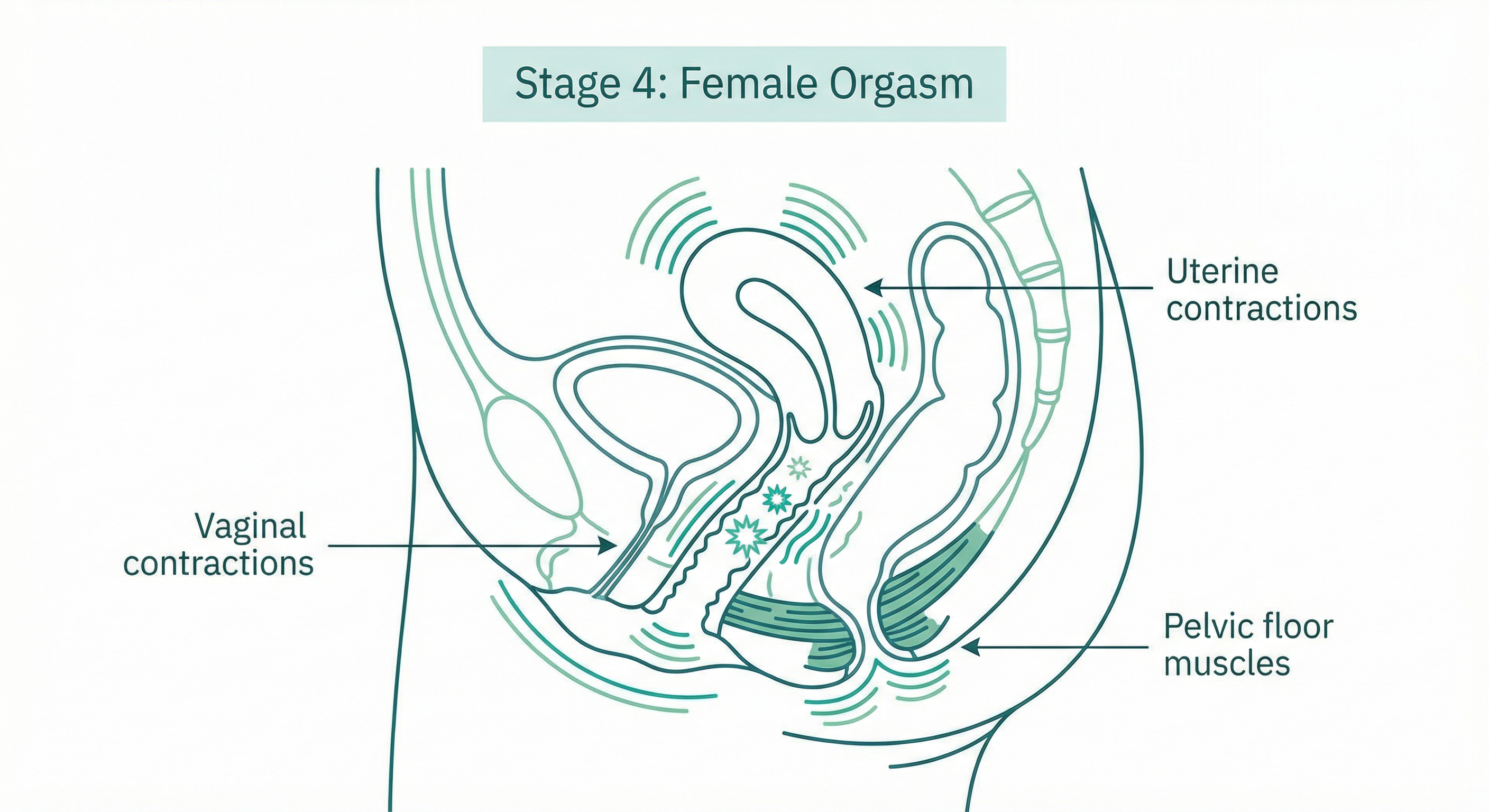
Muscle contractions during female orgasm
- Vaginal contractions: Rhythmic contractions of vaginal walls (0.8 seconds apart)
- Uterine contractions: Uterus contracts rhythmically
- Pelvic floor: PC muscles contract strongly
- Number of contractions: Typically 3-15 contractions
- Duration: 20-35 seconds on average (can be longer)
- Whole body: May experience muscle spasms, curling toes, arched back
- Brain: Releases dopamine, oxytocin, endorphins
- Multiple orgasms: Some women can have several in succession
Male Orgasm & Ejaculation
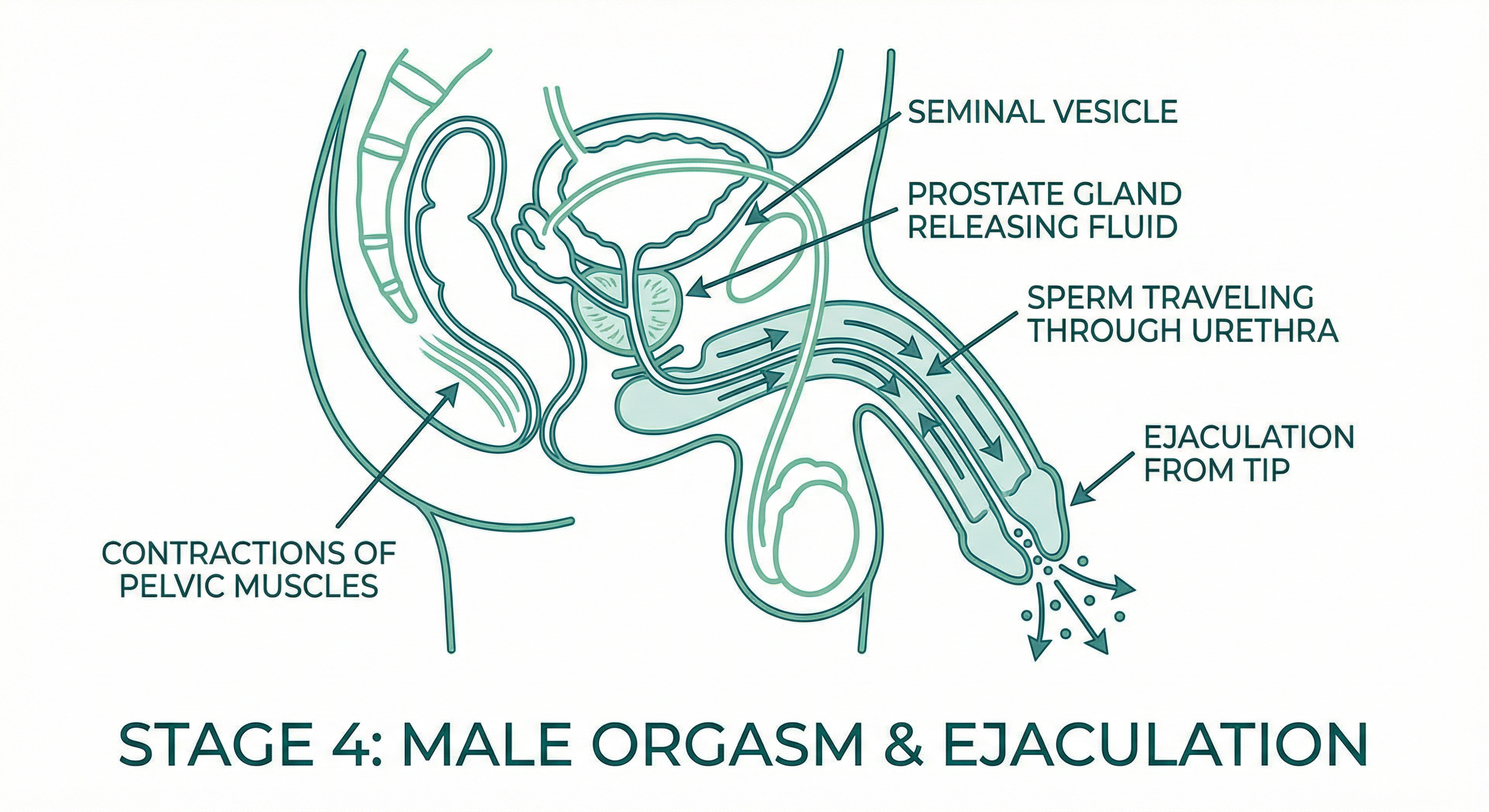
Ejaculation process during male orgasm
- Two phases: Emission (fluid gathers) then ejaculation (expulsion)
- Emission: Sperm from vas deferens + fluid from seminal vesicles & prostate collect
- Point of no return: Once emission begins, ejaculation is inevitable
- Ejaculation: Rhythmic contractions of PC muscles expel semen
- Contractions: 3-15 contractions at 0.8-second intervals
- Volume: Average 2-5 ml of semen (varies widely)
- Force: Can vary from dribbling to forceful spurts
- Sensation: Intense pleasure centered in genitals, spreads through body
Orgasm Facts
- Orgasm and ejaculation are separate processes in men (can have one without the other)
- Female orgasms can come from clitoral, vaginal, or blended stimulation
- Intensity varies - not every orgasm feels earth-shattering
- Some people are quieter, others more vocal - both are normal
- Emotional connection can intensify physical sensations
Resolution Phase
After orgasm, the body gradually returns to its unaroused state. This phase differs significantly between men and women.
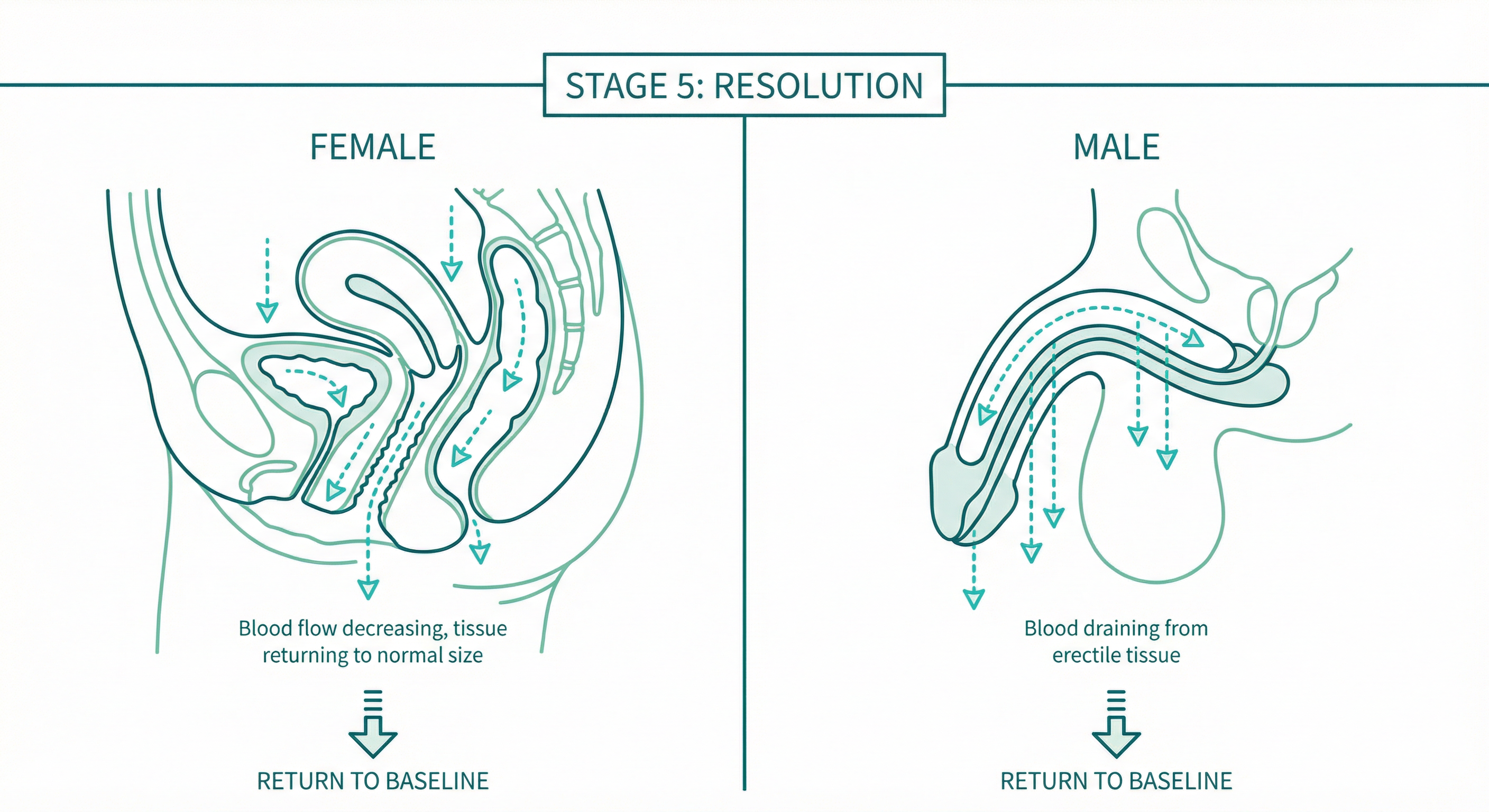
Resolution: body returning to baseline state
Female Resolution
- Clitoris: Returns to normal position and size within minutes
- Vagina: Gradually returns to normal size
- Uterus: Returns to normal position
- Labia: Return to normal color and size
- No refractory period: Can become aroused again quickly if stimulated
- Full resolution: 15-30 minutes for complete return to baseline
Male Resolution
- Detumescence: Penis loses erection as blood drains (two stages - rapid then gradual)
- Testicles: Descend back to normal position
- Scrotum: Relaxes
- Refractory period: Cannot achieve another erection or orgasm for a period
- Refractory duration: Minutes in young men, hours to days in older men
- Sleepiness: Many men feel drowsy after orgasm (prolactin release)
Refractory Period
The time after orgasm when a man cannot achieve another erection or orgasm. Women generally don't have this limitation, which is why multiple orgasms are more common in women.
Post-Orgasm Feelings
Oxytocin release creates feelings of bonding and closeness. Some people feel energized, others sleepy. Both partners may feel vulnerable - this is a good time for emotional connection.
Tips for a Better Experience
Foreplay Matters
- Adequate arousal (especially for women) makes penetration more comfortable
- Minimum 15-20 minutes of foreplay is recommended
- Includes kissing, touching, oral sex, manual stimulation
- Emotional connection enhances physical arousal
Lubrication
- Natural lubrication varies by person, cycle, age, and medications
- Using additional lubricant is not a sign of a problem
- Water-based lubricants are safe with condoms
- Silicone-based lubricants last longer but not compatible with silicone toys
Communication
- Tell your partner what feels good
- Guide their hands/movements
- Speak up if something is uncomfortable
- Discuss desires, boundaries, and contraception beforehand
Remember
- Sex doesn't have to follow a script - there's no "right" way
- Orgasm isn't the only goal - enjoy the whole experience
- Penetration isn't required for satisfying sex
- Both partners' pleasure matters equally
Safety First
Always practice safe sex - use condoms to prevent STIs and appropriate contraception to prevent unwanted pregnancy. Pre-ejaculate can contain sperm, so withdrawal is not reliable.