Many women feel uncomfortable discussing vaginal health, but it's a crucial part of overall wellness. From understanding normal anatomy to recognizing when something's wrong, this guide covers everything you need to know about vaginal health and self-pleasure.
Understanding Your Anatomy
Knowing your anatomy helps you understand your body, communicate with healthcare providers, and recognize changes that may need attention.
External Anatomy (Vulva)
The vulva refers to all the external genitalia. Many people incorrectly call this the "vagina," but the vagina is actually the internal canal.
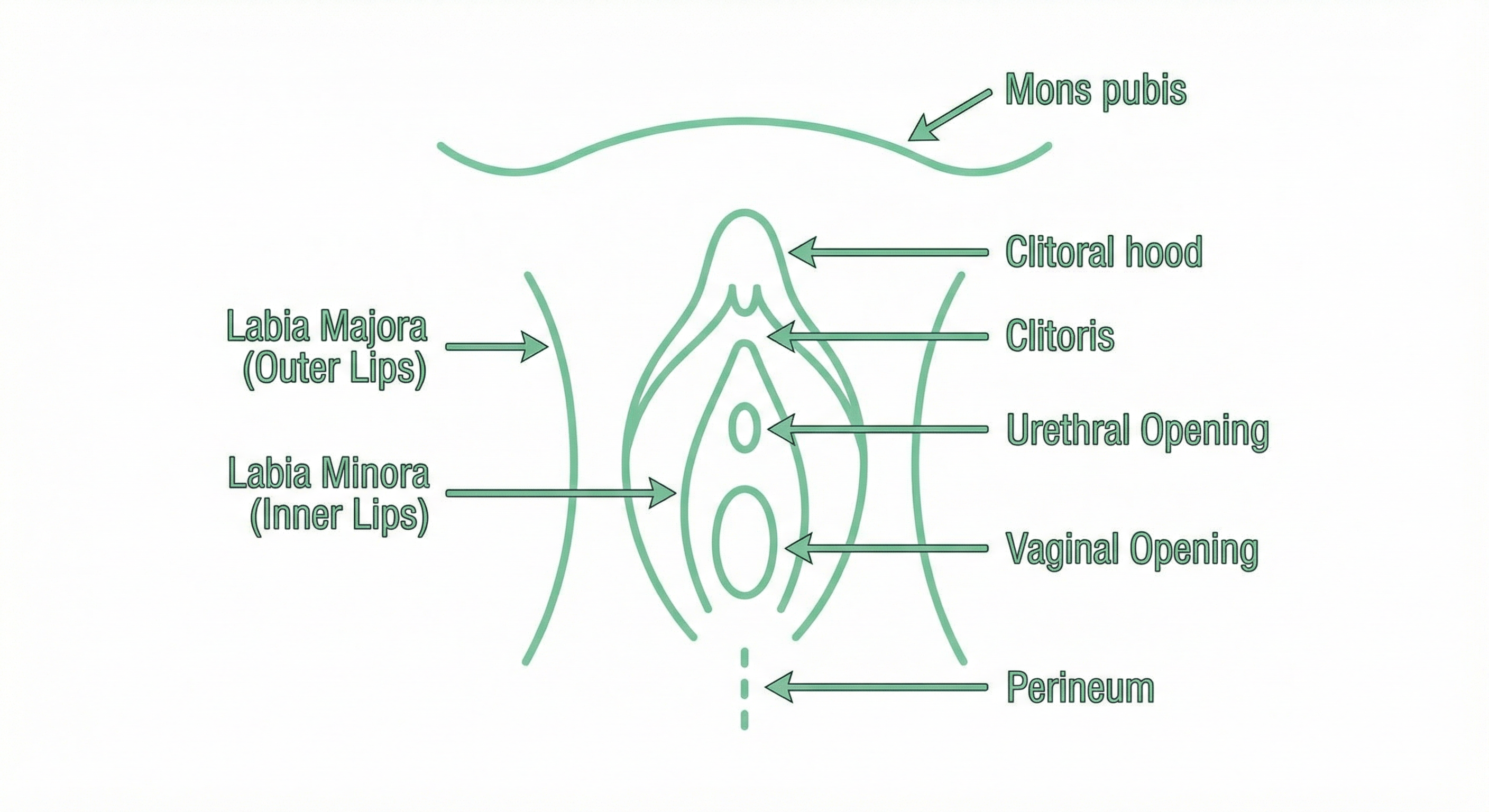
External female anatomy - the vulva
- Mons Pubis: The fatty tissue over the pubic bone, covered with hair after puberty
- Labia Majora (Outer Lips): The outer folds of skin that protect internal structures
- Labia Minora (Inner Lips): Thinner inner folds; vary greatly in size, shape, and color - all variations are normal
- Clitoral Hood: Skin fold that protects the clitoris
- Clitoris: Small, sensitive organ at the top of the vulva - the only organ solely for pleasure, with ~8,000 nerve endings
- Urethral Opening: Where urine exits the body (separate from the vagina)
- Vaginal Opening: Entrance to the vaginal canal
- Perineum: Area between the vaginal opening and anus
Internal Anatomy
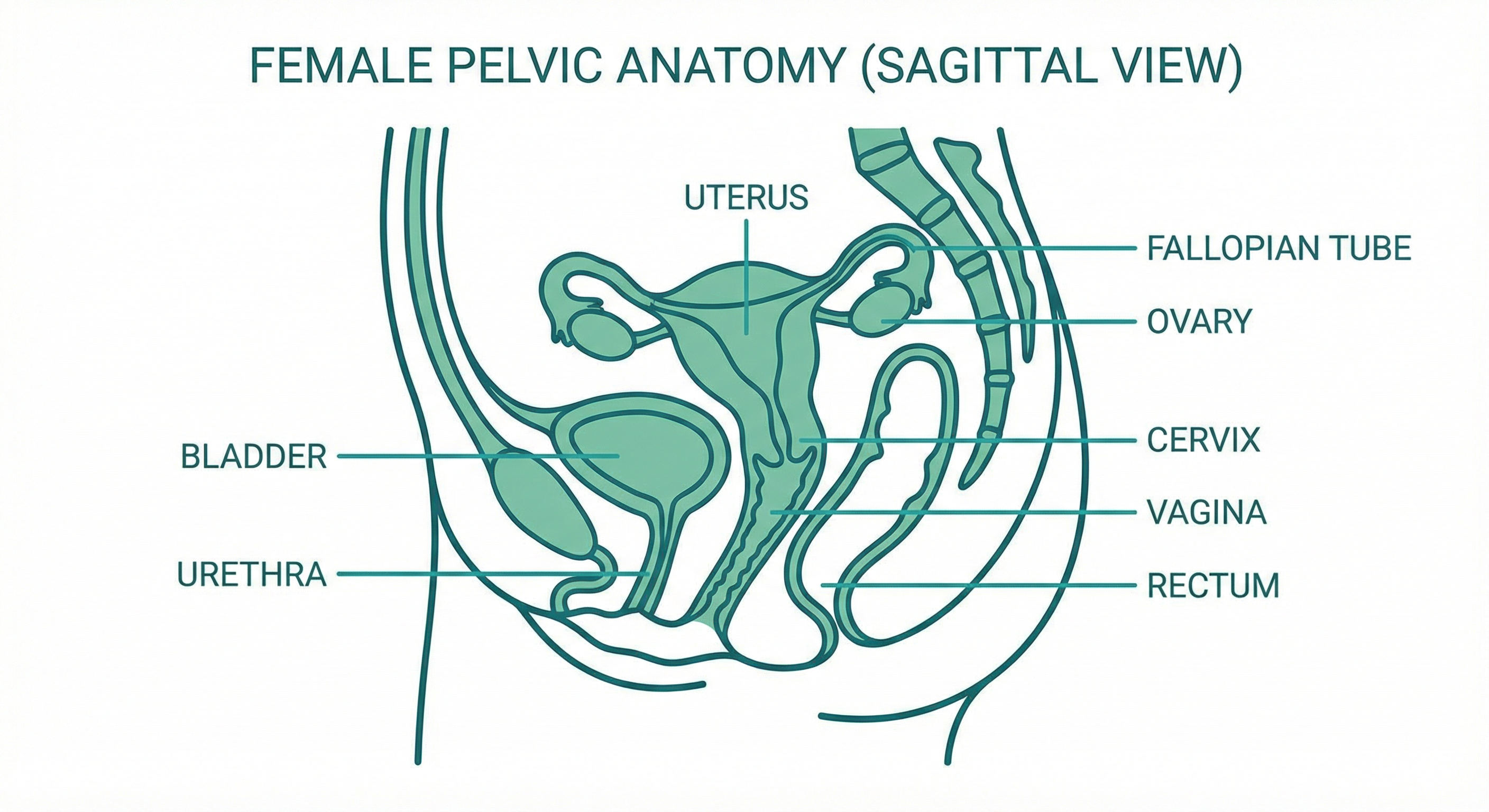
Internal female reproductive anatomy - side view
- Vagina: Muscular canal (3-7 inches) connecting the vulva to the cervix; self-cleaning and elastic
- Cervix: Lower part of the uterus; connects vagina to uterus; produces mucus that changes throughout cycle
- Uterus (Womb): Pear-shaped organ where pregnancy develops; sheds lining during menstruation
- Fallopian Tubes: Tubes connecting ovaries to uterus; where fertilization occurs
- Ovaries: Produce eggs and hormones (estrogen, progesterone)
The Clitoris is Bigger Than You Think
The visible part (glans) is just the tip! The clitoris extends internally with two "legs" (crura) and bulbs that wrap around the vaginal canal. The entire structure is 3-5 inches - similar in size to a penis!
Normal Variations
Every vulva is unique. Here's what's normal:
Labia
- Inner lips can be longer than outer lips - completely normal
- One side can be larger than the other (asymmetry is common)
- Color ranges from pink to brown to purple - all normal
- Texture can be smooth or wrinkled
- Size and appearance change with age, hormones, and childbirth
Clitoris
- Size varies significantly between women
- Some are more visible, others are mostly covered by the hood
- May become slightly larger with age or hormone changes
Vaginal Opening
- The hymen is a thin membrane that can have various shapes (not a "seal")
- Hymen can be stretched or torn by many activities (not just intercourse)
- Some women are born without a hymen - this is normal
Important Message
If your vulva looks different from images you've seen, that's normal! Pornography and media often show only one type. There's enormous natural variation, and yours is normal for you.
Vaginal Discharge
Vaginal discharge is normal and healthy - it's how the vagina cleans itself. The amount, color, and consistency change throughout your menstrual cycle.
Normal Discharge Throughout Your Cycle
| Cycle Phase | Appearance | What It Means |
|---|---|---|
| After Period | Minimal, dry | Low fertility phase |
| Before Ovulation | White, creamy | Estrogen rising |
| Ovulation | Clear, stretchy (like egg white) | Most fertile - sperm-friendly mucus |
| After Ovulation | Thick, white, sticky | Progesterone dominant |
| Before Period | Thick, may be slightly brown | Preparing for menstruation |
When Discharge May Indicate a Problem
Normal
- White or clear
- Mild or no odor
- Varies with cycle
- No itching or burning
See a Doctor If
- Green or yellow color
- Strong, fishy odor
- Cottage cheese texture (yeast)
- Accompanied by itching, burning, or pain
Vaginal Hygiene
The vagina is self-cleaning - it doesn't need special products. In fact, many products can disrupt the natural balance and cause problems.
Daily Care - Do's
- Wash the vulva (external only): Use warm water; mild, unscented soap is optional
- Wipe front to back: Prevents bacteria from anus reaching vagina/urethra
- Wear breathable underwear: Cotton is best; change daily
- Change out of wet clothes: Don't stay in wet swimsuits or sweaty gym clothes
- Urinate after sex: Helps prevent UTIs
- Change pads/tampons regularly: Every 4-6 hours for pads, 4-8 hours for tampons
What to Avoid
- Douching: Disrupts natural bacteria balance; linked to infections and other problems
- Scented products: Vaginal washes, sprays, wipes, scented pads - all can cause irritation
- Washing inside: Never put soap, water, or anything inside the vagina to "clean" it
- Tight, non-breathable clothing: Creates warm, moist environment for infections
- Perfumed products near genitals: Bubble baths, scented toilet paper
About Vaginal Odor
A mild, musky odor is normal and healthy. It changes slightly throughout your cycle and after sex. Strong, fishy, or foul odors usually indicate an infection and need medical attention. Don't try to mask odor with products - see a doctor.
Common Vaginal Conditions
Yeast Infection (Candidiasis)
- Symptoms: Thick, white, cottage-cheese discharge; intense itching; redness; burning during urination
- Cause: Overgrowth of Candida fungus (normally present in small amounts)
- Triggers: Antibiotics, high sugar diet, tight clothes, weakened immunity, hormonal changes
- Treatment: Antifungal creams or oral medication (available OTC and prescription)
Bacterial Vaginosis (BV)
- Symptoms: Thin, gray discharge; strong fishy odor (especially after sex); mild itching
- Cause: Imbalance of vaginal bacteria - overgrowth of "bad" bacteria
- Triggers: Douching, new sexual partners, unprotected sex
- Treatment: Antibiotics (prescription required)
Urinary Tract Infection (UTI)
- Symptoms: Burning during urination, frequent urge to urinate, cloudy/bloody urine, pelvic pain
- Cause: Bacteria entering the urethra
- Prevention: Urinate after sex, wipe front to back, stay hydrated
- Treatment: Antibiotics (see a doctor promptly)
Vaginal Dryness
- Symptoms: Discomfort, itching, pain during intercourse
- Causes: Menopause, breastfeeding, certain medications, insufficient arousal
- Treatment: Water-based lubricants, vaginal moisturizers, hormone therapy if needed
Vaginismus
- What: Involuntary tightening of vaginal muscles making penetration painful or impossible
- Causes: Often psychological (fear, trauma, anxiety) but can have physical causes
- Treatment: Pelvic floor therapy, dilators, counseling - very treatable with patience
Vaginal pH Balance
The vagina maintains an acidic environment (pH 3.8-4.5) that protects against infections. Many things can disrupt this balance.
What Affects pH
- Menstruation: Blood is more alkaline, temporarily raising pH
- Semen: Alkaline; can temporarily raise pH after sex
- Douching: Dramatically disrupts pH - never recommended
- Antibiotics: Kill good bacteria too
- Menopause: Lower estrogen can raise pH
Supporting Healthy pH
- Don't douche or use internal cleansing products
- Eat probiotic-rich foods (yogurt, fermented foods)
- Use condoms (prevents semen from affecting pH)
- Wear breathable cotton underwear
- See a doctor if you notice persistent changes
Female Masturbation: Facts & Health
Masturbation is a normal, healthy sexual activity. Despite cultural taboos, medical science confirms it's beneficial for both physical and mental health. Self-pleasure helps you understand your body and what brings you pleasure.
Medical Perspective
Masturbation is completely normal and healthy. It does NOT cause infertility, damage your body, or make you "loose." These are myths with no scientific basis. Self-pleasure is a natural part of human sexuality at any age.
Health Benefits
- Stress relief: Releases endorphins and reduces cortisol
- Better sleep: Relaxation after orgasm can help with sleep
- Pain relief: Can help with menstrual cramps and headaches
- Pelvic floor health: Orgasms exercise pelvic floor muscles
- Self-knowledge: Learn what brings you pleasure - helpful for partnered sex
- Mood improvement: Releases dopamine and oxytocin
- Sexual function: Maintains lubrication and tissue health
- Safe: Zero risk of STIs or pregnancy
Techniques
Every woman is different - exploration helps you discover what works for you. Most women need clitoral stimulation to orgasm.
1. Clitoral Stimulation (Most Common)
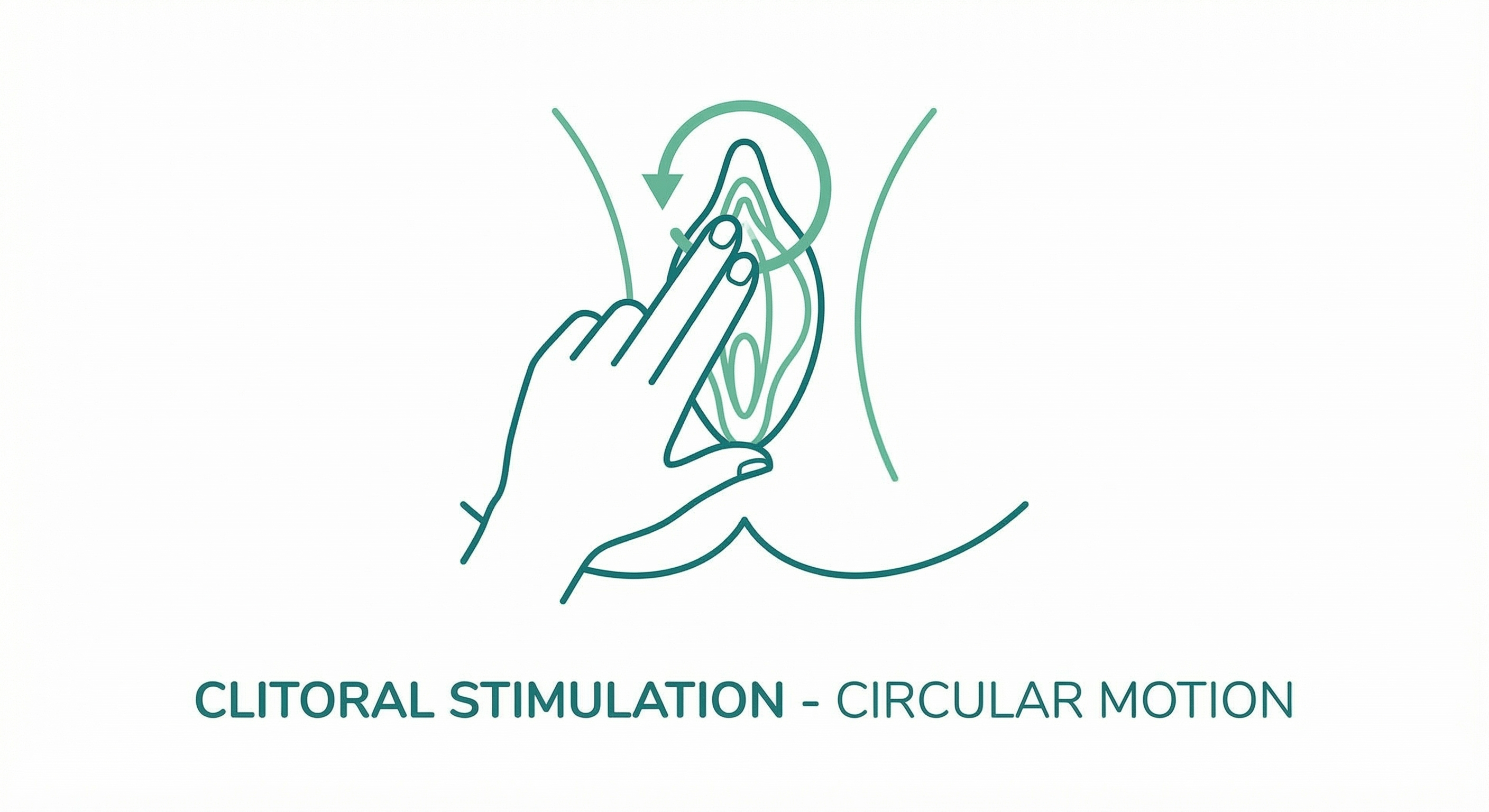
- The clitoris has ~8,000 nerve endings - highly sensitive
- Use one or two fingers on or around the clitoris
- Circular motions are most common, but try different patterns
- Start gently - direct contact may be too intense initially
- Try stimulating around the clitoris, not just on it
- Vary speed and pressure to find what feels best
2. Labia/Vulva Stroking
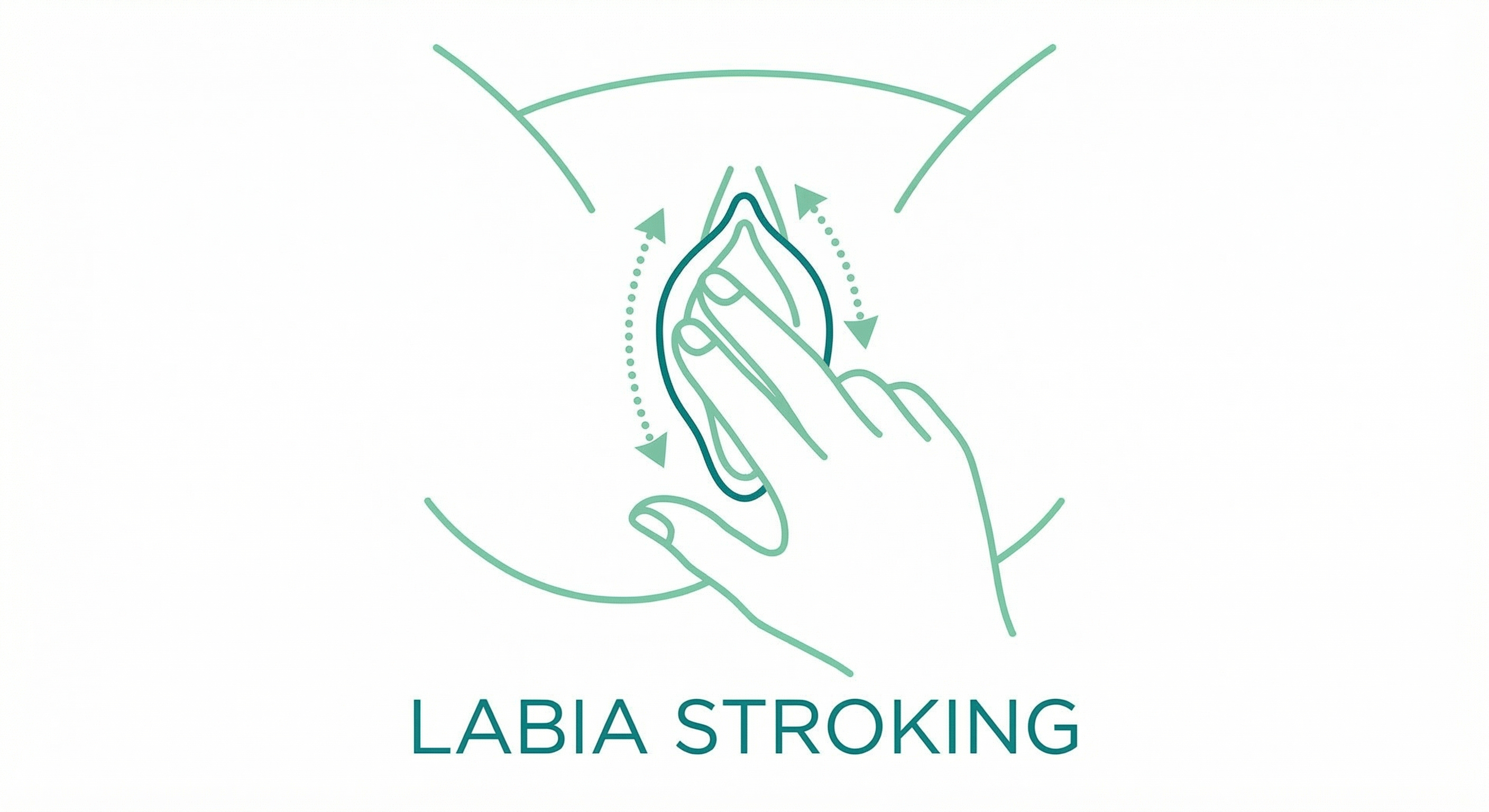
- Gently stroke the inner and outer labia
- Use up-and-down or circular motions
- Good for building arousal before clitoral focus
- The entire vulva has sensitive nerve endings
3. Vaginal/Internal Stimulation
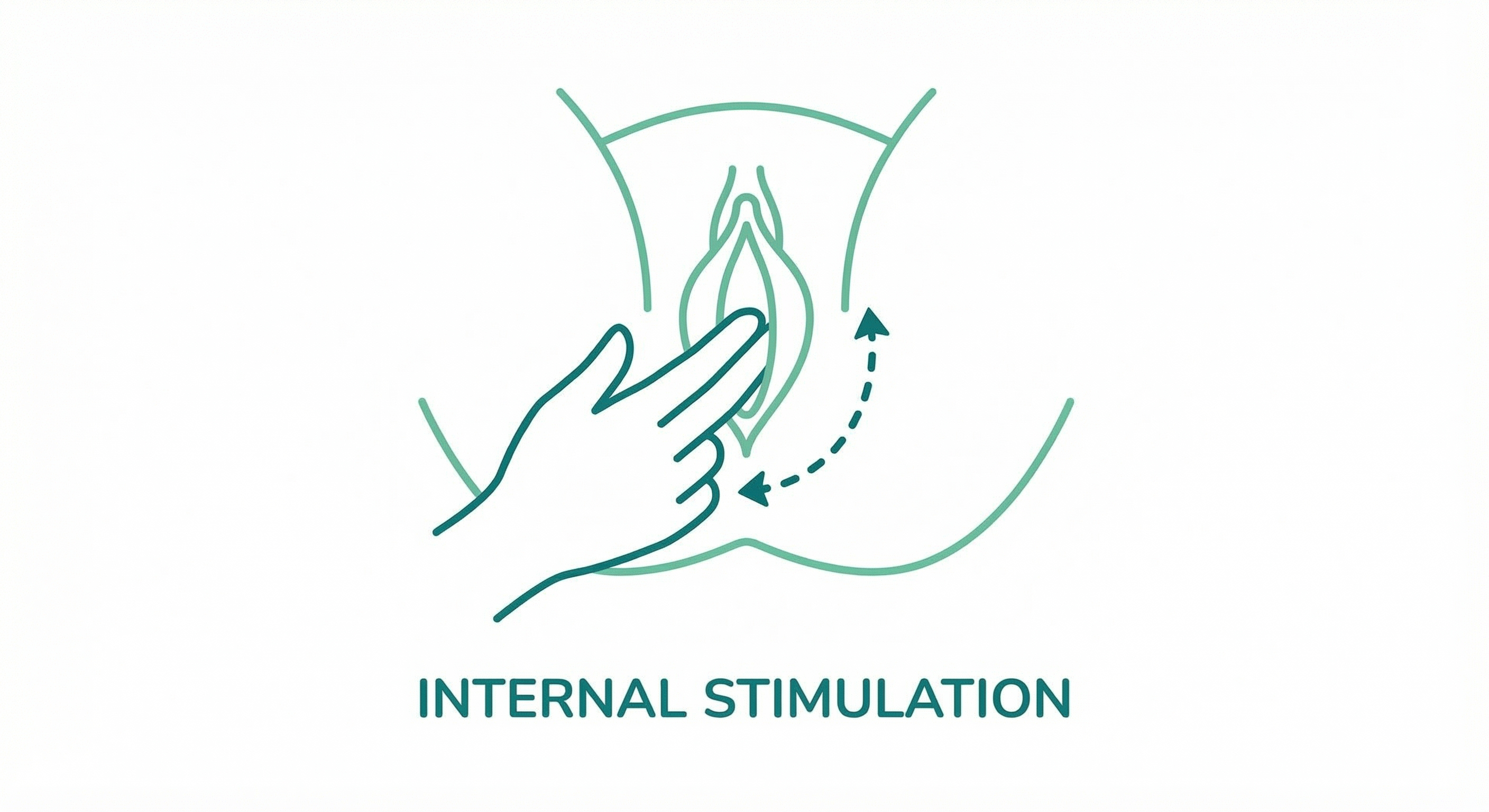
- Insert one or two fingers into the vagina
- Move in and out, or try different motions
- Many women enjoy this combined with clitoral stimulation
- The first 2-3 inches have the most nerve endings
- Make sure hands are clean; consider lubricant
4. G-Spot Stimulation
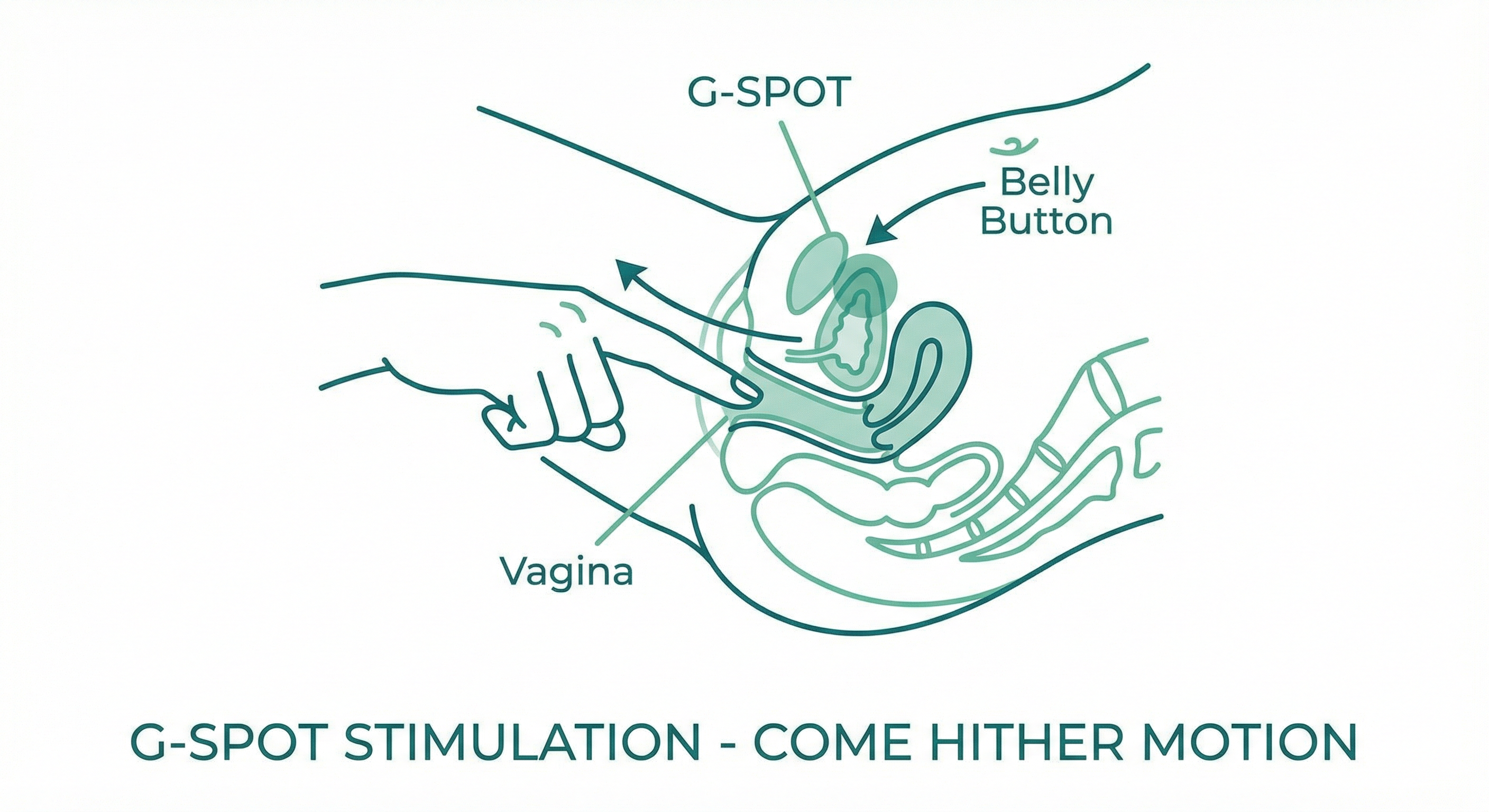
- The G-spot is on the front wall of the vagina (toward belly button)
- About 2-3 inches inside, feels slightly ridged/textured
- Insert finger(s) and curl in a "come hither" motion
- Apply firm, rhythmic pressure
- Not all women find this pleasurable - that's normal
- May create sensation of needing to urinate initially
5. Combined Stimulation
- Many women find the most pleasure from combining techniques
- Clitoral + internal stimulation together
- One hand on clitoris, other hand or toy for internal
- Don't forget other erogenous zones: nipples, inner thighs, neck
Using Vibrators and Toys
- Clitoral vibrators: Provide consistent stimulation; many shapes and intensities
- Internal vibrators: For vaginal or G-spot stimulation
- Combination toys: Stimulate both areas simultaneously
- Safety: Use body-safe materials (silicone, stainless steel, glass); keep clean
- Lubricant: Water-based lubricant is safe with all toys
Tips for Better Experience
- Take your time: Arousal builds gradually - don't rush
- Create the right environment: Privacy, comfort, relaxation
- Use lubricant: Especially for internal stimulation
- Explore: Try different techniques, speeds, pressures
- Fantasies are normal: Mental arousal enhances physical pleasure
- No pressure: Orgasm isn't the only goal - enjoy the sensations
Normal
- Daily masturbation or rarely
- Using toys or just hands
- Taking a long time to orgasm
- Not always reaching orgasm
- Different techniques working at different times
May Need Attention
- Causing physical injury
- Interfering with daily responsibilities
- Unable to enjoy partnered sex
- Compulsive behavior causing distress
About Orgasm
- 70% of women need clitoral stimulation to orgasm
- Vaginal-only orgasms are less common - this is normal
- Orgasm experience varies - can be subtle or intense
- Multiple orgasms are possible for some women
- Not reaching orgasm doesn't mean something is wrong
- With practice, many women find it easier to orgasm
Debunking Myths
- Myth: Masturbation is only for single people → Fact: People in relationships masturbate too
- Myth: It makes you "loose" → Fact: The vagina is elastic and returns to normal
- Myth: Women shouldn't enjoy it → Fact: Female pleasure is natural and healthy
- Myth: Vibrators will desensitize you → Fact: Any desensitization is temporary
- Myth: You should orgasm quickly → Fact: Women often take 20+ minutes - this is normal
- Myth: It affects fertility → Fact: No impact on fertility whatsoever
Vaginal Health Through Life Stages
Puberty
- Vaginal discharge begins (normal)
- First period (menarche)
- Pubic hair develops
- Labia may change in appearance
Reproductive Years
- Monthly cycles with varying discharge
- May experience occasional infections
- Changes during pregnancy (increased discharge, blood flow)
- Postpartum changes (dryness, healing)
Perimenopause & Menopause
- Decreasing estrogen affects vaginal tissue
- Vaginal dryness is common
- Tissue becomes thinner, less elastic
- pH may become more alkaline (higher infection risk)
- Treatment options: moisturizers, lubricants, hormone therapy
When to See a Doctor
Don't hesitate to consult a gynecologist for any concerns. Regular check-ups are important even without symptoms.
See a Doctor For:
- Unusual discharge (color, smell, consistency)
- Persistent itching or burning
- Pain during intercourse
- Bleeding between periods or after menopause
- Sores, lumps, or growths
- Pelvic pain
- Changes in menstrual cycle
- Difficulty with urination
Regular Screenings
- Pap smear: Starting at age 21, every 3 years (or as advised)
- HPV test: Often combined with Pap after age 30
- Annual exam: Even if not due for Pap, regular check-ups are valuable
Finding Care
A gynecologist specializes in women's reproductive health. For any vaginal concerns, they're the best resource. Don't feel embarrassed - they see these issues every day and are there to help.