Introduction
Sex toys are tools designed to enhance sexual pleasure, either alone or with a partner. When used responsibly, they can be a healthy part of sexuality. This guide provides medical and practical information to help you make informed choices.
Health Perspective
Using sex toys is normal and healthy. Research shows they can help with:
- Sexual self-discovery and body awareness
- Improving sexual satisfaction
- Managing certain sexual difficulties
- Enhancing intimacy with partners
- Stress relief and better sleep
Types of Toys
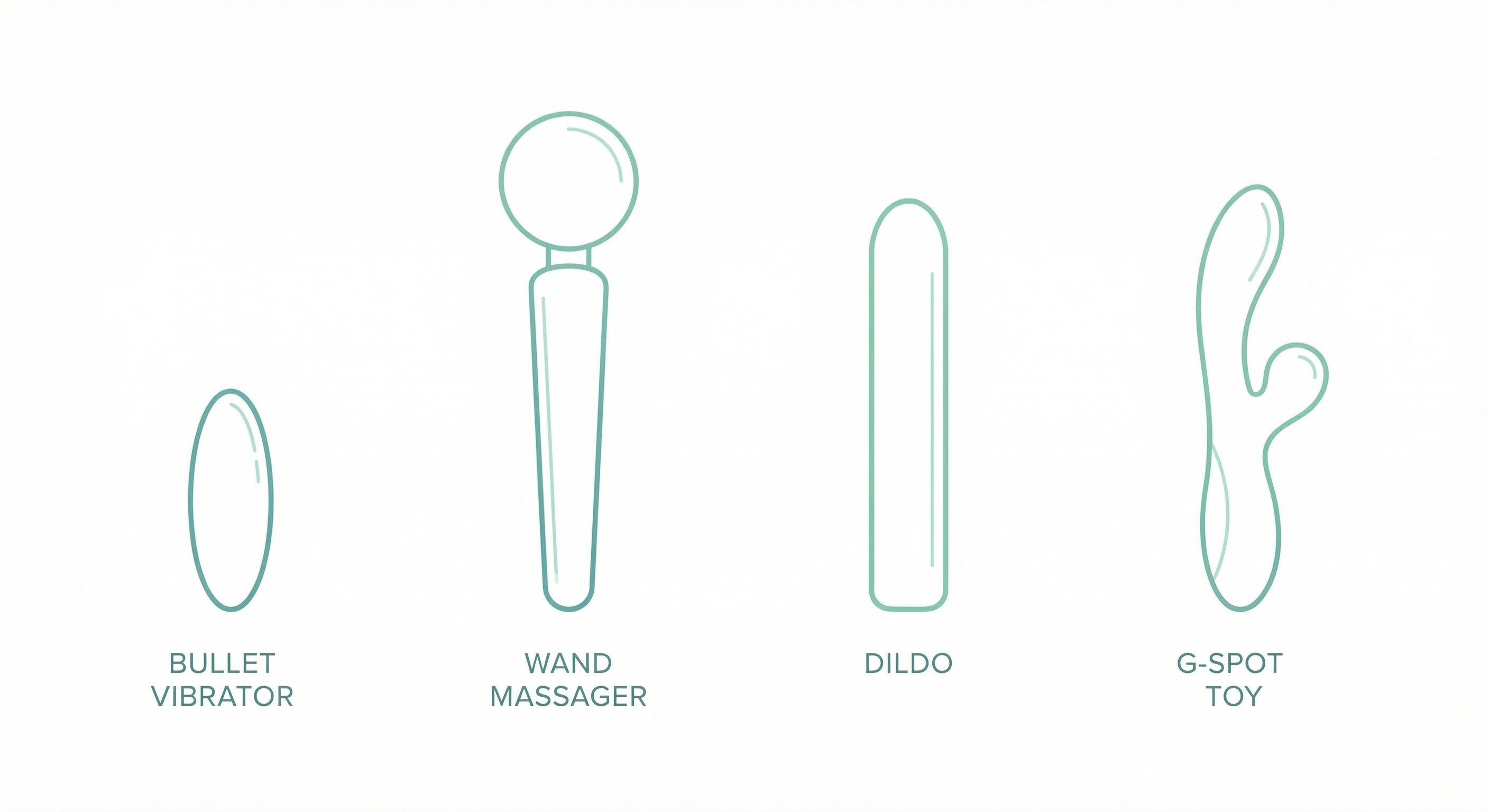
Vibrators
Battery or rechargeable devices that produce vibrations for external or internal stimulation.
Best for: Clitoral/external stimulationDildos
Non-vibrating toys designed for penetration. Come in various sizes, shapes, and materials.
Best for: Internal stimulationCock Rings
Worn at the base of the penis to restrict blood flow, potentially enhancing erection and sensation.
Best for: Couples, erection supportBullet/Egg Vibrators
Small, discreet vibrators ideal for targeted stimulation. Some can be worn during intercourse.
Best for: Beginners, travelWand Massagers
Powerful vibrators with a large head. Originally designed as body massagers.
Best for: Intense external stimulationG-Spot Toys
Curved design to target the G-spot area on the front vaginal wall.
Best for: Internal G-spot stimulationAnal Toys
Specifically designed for anal use with flared bases for safety. Includes plugs, beads, and prostate massagers.
Best for: Anal play (must have flared base!)Couples' Toys
Designed to be used by both partners during intercourse, such as vibrating rings or remote-controlled devices.
Best for: Shared intimacyMaterial Safety
The material of a sex toy significantly affects its safety, durability, and ease of cleaning. Choose body-safe materials for your health.
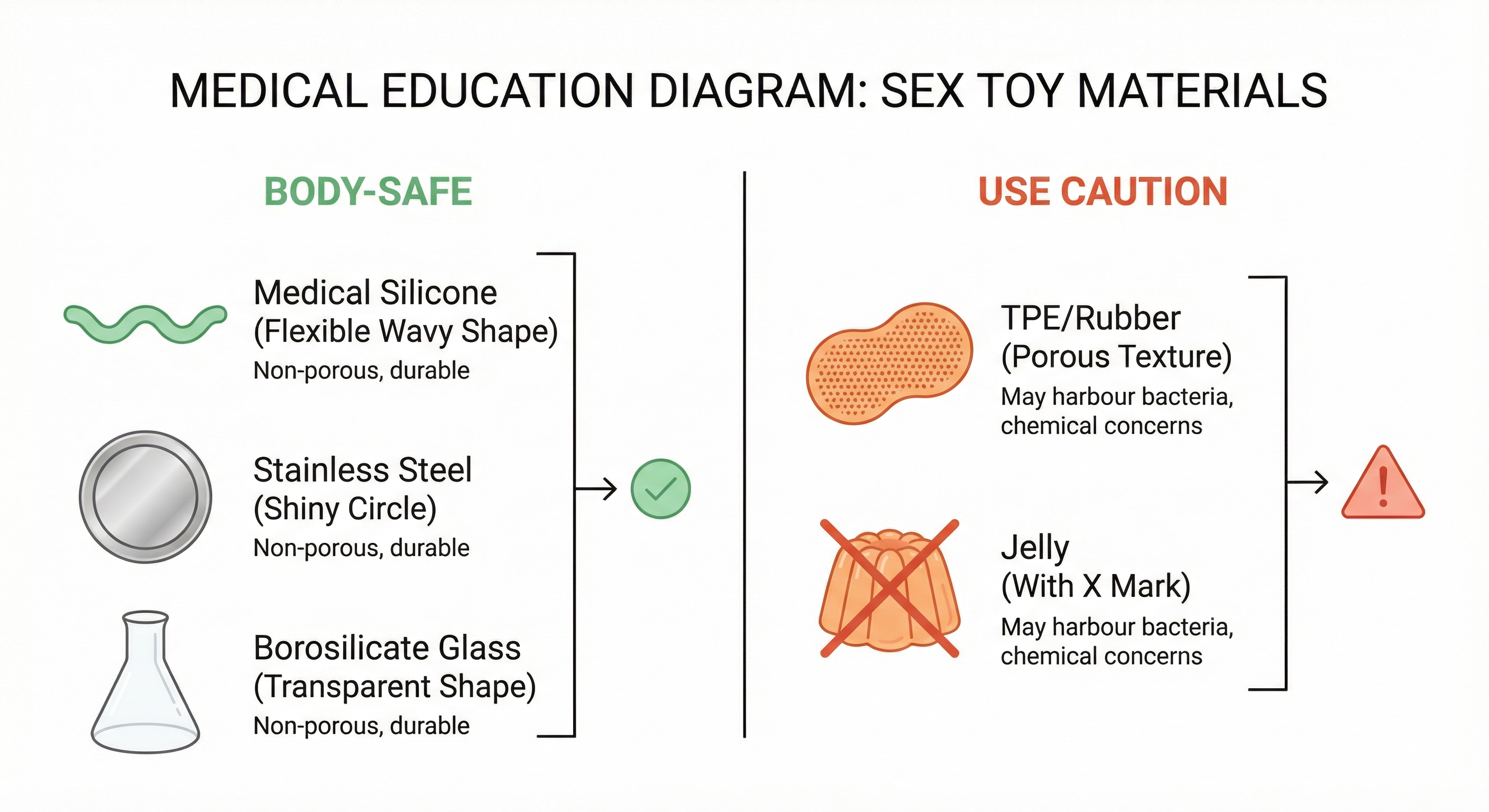
| Material | Safety | Properties | Care |
|---|---|---|---|
| Medical-Grade Silicone | Body-Safe | Non-porous, hypoallergenic, flexible, retains body heat | Wash with soap & water; can be boiled |
| Stainless Steel | Body-Safe | Non-porous, heavy, can be heated/cooled for temperature play | Wash with soap & water; can be boiled |
| Glass (Borosilicate) | Body-Safe | Non-porous, smooth, temperature play, visually appealing | Wash with soap & water; inspect for cracks |
| ABS Plastic | Body-Safe | Non-porous, hard, often used for vibrator casings | Wash with soap & water |
| TPE/TPR (Elastomer) | Use Caution | Porous, softer, may contain additives; replace regularly | Wash thoroughly; use with condom |
| PVC/Vinyl | Use Caution | Porous, may contain phthalates; use with condom | Wash thoroughly; use with condom |
| Jelly Rubber | Avoid | Very porous, often contains phthalates, cannot be fully sanitized | Not recommended for internal use |
Avoid Phthalates
Phthalates are chemicals used to soften plastics. They can leach out of toys and may be harmful. Look for "phthalate-free" labels or choose silicone, glass, or steel toys.
Cleaning & Hygiene
Proper cleaning is essential to prevent infections and extend the life of your toys.
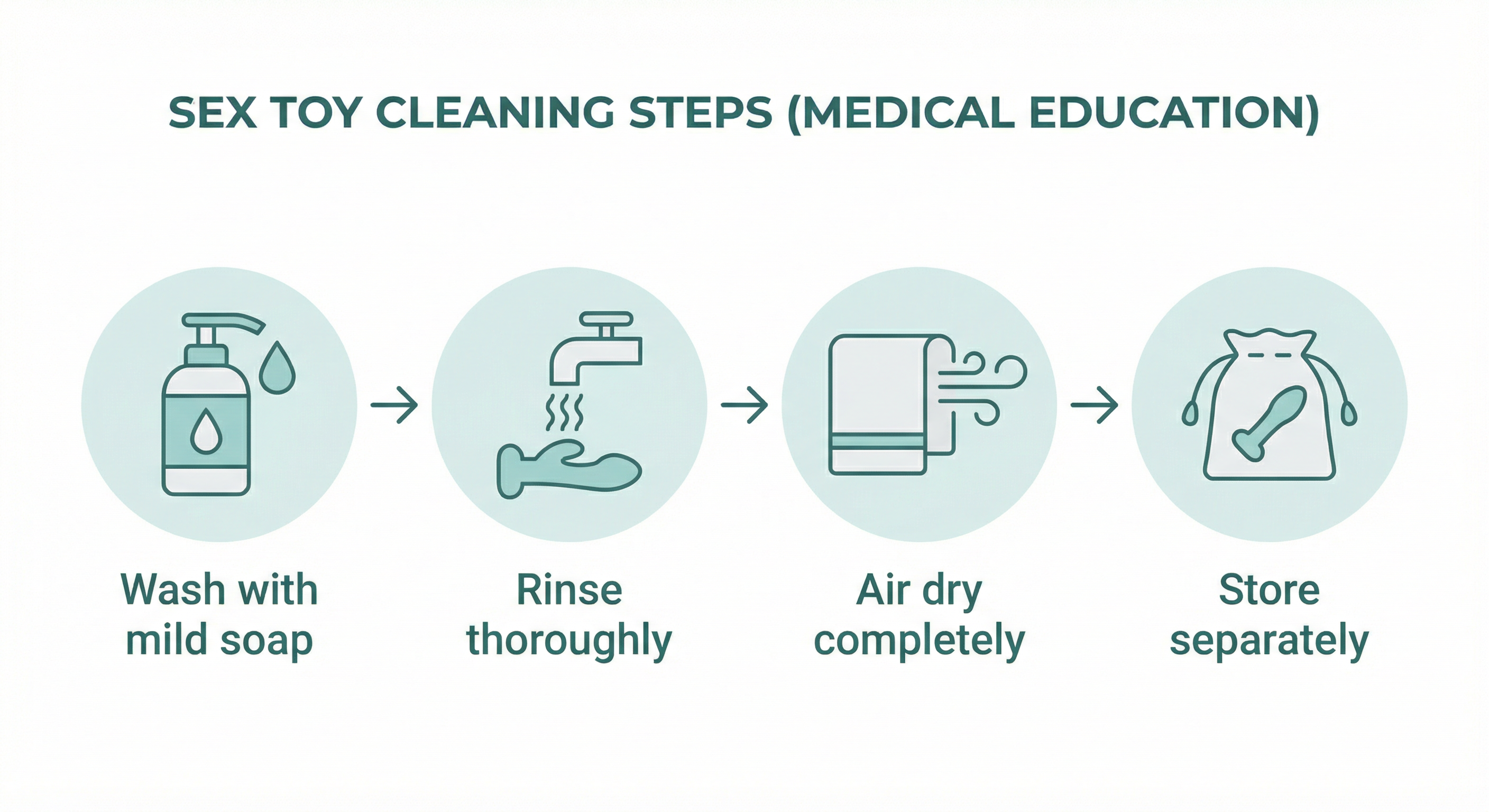
Before Use
Always wash toys before first use and before each subsequent use
Basic Cleaning
Warm water + mild unscented soap for most toys
Deep Cleaning
Boil silicone/steel/glass toys for 3-5 mins (no electronics)
Drying
Air dry completely before storing to prevent mold/bacteria
Cleaning by Material
- Silicone, Glass, Steel: Soap & water, can be boiled (if no motors), or use 10% bleach solution, rinse well
- ABS Plastic: Soap & water, toy cleaner spray
- Porous materials (TPE, rubber): Soap & water, toy cleaner, consider using with condoms
- Motorized toys: Wipe with damp cloth, don't submerge unless waterproof
Storage Tips
- Store each toy separately (materials can react)
- Use fabric pouches or original packaging
- Keep away from direct sunlight and extreme temperatures
- Remove batteries during storage to prevent corrosion
Lubricant Compatibility
Using the right lubricant is important for comfort and to protect your toys.
| Toy Material | Compatible Lubricants | Avoid |
|---|---|---|
| Silicone toys | Water-based lubricants only | Silicone-based lubes (damages silicone) |
| Glass/Steel | Any lubricant type | None |
| Rubber/TPE | Water-based lubricants | Oil-based (degrades material) |
| With condoms | Water-based or silicone-based | Oil-based (breaks latex) |
When in Doubt
Water-based lubricant is safe with all toy materials and all condom types. It's the most versatile choice.
Safe Usage Guidelines
DO
- Read instructions before first use
- Start with smaller sizes if you're a beginner
- Use plenty of lubricant
- Clean before and after every use
- Inspect toys for cracks or damage regularly
- Use toys only for their intended purpose
- Store toys properly in clean, dry places
- Use condoms on porous toys or when sharing
- Listen to your body - stop if there's pain
- Replace toys that show wear or damage
DON'T
- Share toys without proper cleaning or condoms
- Use toys designed for vaginal use anally (and vice versa)
- Use silicone lube with silicone toys
- Insert toys without a flared base anally
- Ignore pain or discomfort
- Use household items as toys (safety risk)
- Use toys with numbing agents
- Leave vibrating toys on one spot too long
- Use damaged or discolored toys
- Store different materials touching each other
Anal Toy Safety
Anal play requires special precautions due to the anatomy of the rectum.
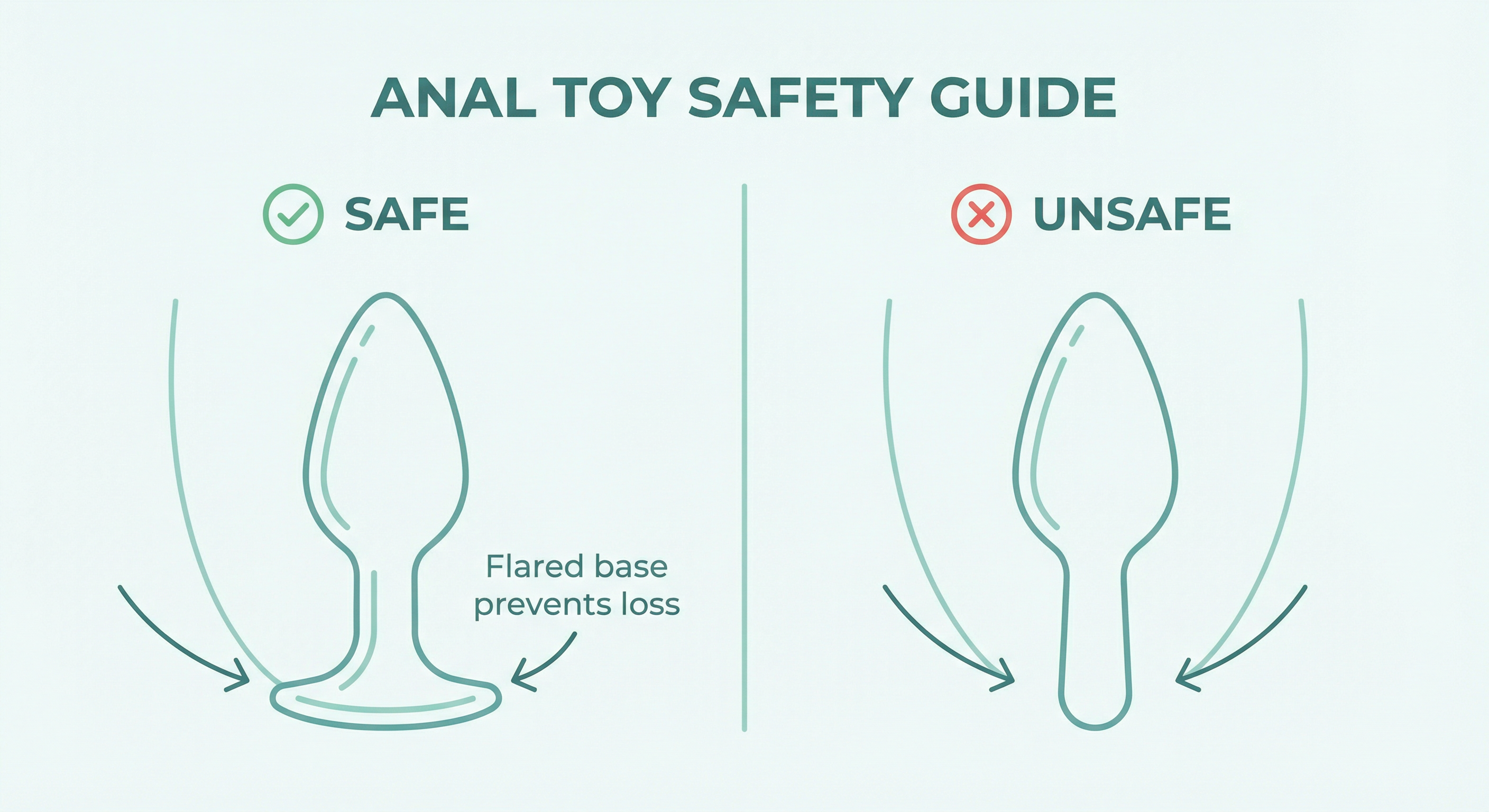
Critical Safety Rule
ALWAYS use toys with a flared base for anal play. Unlike the vagina, the rectum can draw objects inward. Objects without a flared base can get lost inside and require emergency medical removal.
Anal Play Guidelines
- Flared base is non-negotiable - The base should be significantly wider than the insertable part
- Use lots of lubricant - The rectum doesn't self-lubricate; reapply as needed
- Start small - Begin with fingers or small toys and work up gradually
- Go slow - The anal sphincter needs time to relax
- Never use numbing products - Pain is a warning signal; you need to feel it
- Don't switch from anal to vaginal - Use separate toys or clean thoroughly to prevent infection
Using Toys with Partners
Communication First
- Discuss interest in toys openly before introducing them
- Frame it as exploration together, not a replacement
- Respect if your partner isn't interested
- Start with something simple (like a vibrating ring)
- Give feedback about what feels good
Hygiene When Sharing
- Each partner should have their own insertable toys ideally
- Use condoms on shared toys and change between partners
- Clean thoroughly between uses
- Get tested regularly for STIs
Building Intimacy
Toys can enhance intimacy by opening conversations about pleasure, trying new things together, and focusing on mutual satisfaction. They're tools to add to your connection, not replace it.
Buying Guide
What to Look For
- Body-safe materials - Silicone, glass, steel, ABS plastic
- Phthalate-free labeling - Especially for softer materials
- Reputable brands - Established companies with good reviews
- Appropriate size - Start smaller if you're new
- Rechargeable vs battery - Rechargeable is more economical long-term
- Waterproof rating - Easier to clean, can use in shower
Where to Buy
- Online retailers - Discreet packaging, reviews, wide selection
- Specialty stores - Staff can provide guidance
- Avoid - Very cheap unbranded products, novelty stores with poor quality items
Beware of Fakes
Counterfeit toys claiming to be silicone may actually be cheaper, unsafe materials. Buy from authorized retailers. If a price seems too good to be true, it probably is.
When to See a Doctor
Seek medical attention if you experience:
- Object stuck or lost inside the body (don't try to retrieve it yourself)
- Pain that persists after use
- Bleeding or unusual discharge
- Signs of infection (redness, swelling, fever, unusual odor)
- Allergic reaction (itching, rash, burning)
- Numbness that doesn't resolve
Don't Be Embarrassed
Medical professionals have seen it all. They're there to help, not judge. Delaying treatment for embarrassment can lead to serious complications. Be honest about what happened so they can help you properly.